Hike to the Valley of Five Polish Lakes (Dolina Pięciu Stawów Polskich) (Zakopane)
If Morskie Oko is the most famous lake in the Tatra Mountains, the Valley of Five Polish Lakes is its lesser-known — and arguably more spectacular — neighbour. The trail is longer and more demanding, but it rewards hikers with five stunning alpine lakes, two impressive waterfalls, and far fewer crowds. For anyone looking for a full day in the High Tatras with genuine mountain scenery, this hike is hard to beat.
Quick Facts
- Location: GPS 49.25672, 20.10199 (Palenica Białczańska trailhead)
- Distance: 16.8 km
- Elevation gain: 680 m up / 680 m down
- Time needed: ~6 hours
- Difficulty (1–5): 4
- Trail type: Mountain trail with steep sections, rocky terrain, and stone steps
- Parking: Not recommended — paid parking is available at Palenica Białczańska, but it fills up early and the e-ticket system is required. Public transport is a much better option.
- Public transport: Minibuses run regularly from Zakopane (departing from Jagiellońska street in the town centre) to Palenica Białczańska. The ride takes around 30–40 minutes and costs approximately 10 PLN one way.
- Entrance fee: A small entrance fee is required to enter Tatra National Park.
- Best season: Late June – October
- Dog friendly: No (dogs are not allowed in most parts of the national park)
- Family friendly: Suitable only for families with older children who are comfortable with longer distances and steep, rocky terrain.
Parking & How to Get There
The trailhead is at Palenica Białczańska — the same starting point used for the hike to Morskie Oko.
The easiest way to get there from Zakopane is by minibus. Buses depart regularly from the centre of Zakopane and drop passengers directly at the Palenica Białczańska car park. The last return bus to Zakopane runs in the evening, so it is worth checking the schedule before you set off.
Paid parking is available at the trailhead, but during peak season the car park fills up very quickly — often before 7am. Parking requires an e-ticket purchased in advance. Taking the minibus is strongly recommended.
GPS (start): GPS 49.25672, 20.10199
Hiking the Trail
The hike starts with a flat, paved road — the same well-known route used by the crowds heading to Morskie Oko. After about 30–40 minutes, you reach the Wodogrzmoty Mickiewicza waterfall. This is where the trail to the Valley of Five Lakes splits off to the right, following the green trail up into the Roztoka Valley.
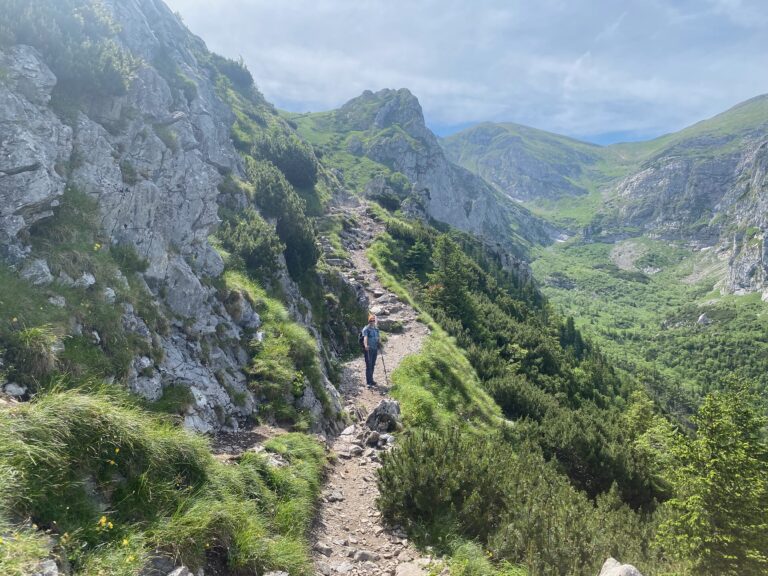
From this point the character of the hike changes completely. The path climbs steeply through dense forest, with stone steps and rocky sections that require a bit of effort. The crowds thin out quickly once you leave the main Morskie Oko road behind.
After passing through the Roztoka Valley, the trail opens up above the tree line and leads past the impressive Siklawa Waterfall — the tallest waterfall in the Polish Tatras — before arriving in the valley itself. The five lakes appear one by one as you walk deeper in, with the mountain hut at Przedni Staw marking the heart of the valley.
The return follows the black trail back down — a steeper but shorter descent that offers great views before rejoining the paved road to Palenica Białczańska.
Highlights
Wodogrzmoty Mickiewicza Waterfall: The first major landmark of the hike, this waterfall marks the point where the trail leaves the busy Morskie Oko road and heads upward into quieter mountain terrain. There are benches and a rest area here — a good spot to prepare for the climb ahead.
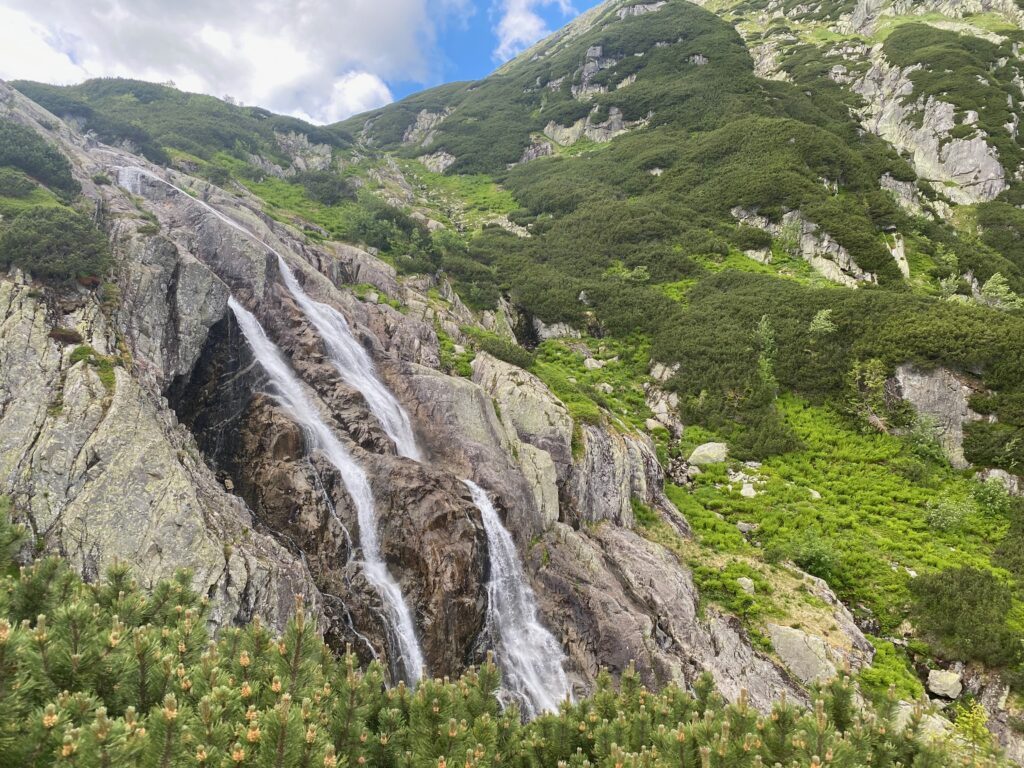
Siklawa Waterfall: At nearly 70 metres high, Siklawa is the tallest waterfall in the Polish Tatras. The trail passes directly alongside it, and on sunny days the mist creates vivid rainbows in the spray. It is one of the most dramatic moments of the entire hike.
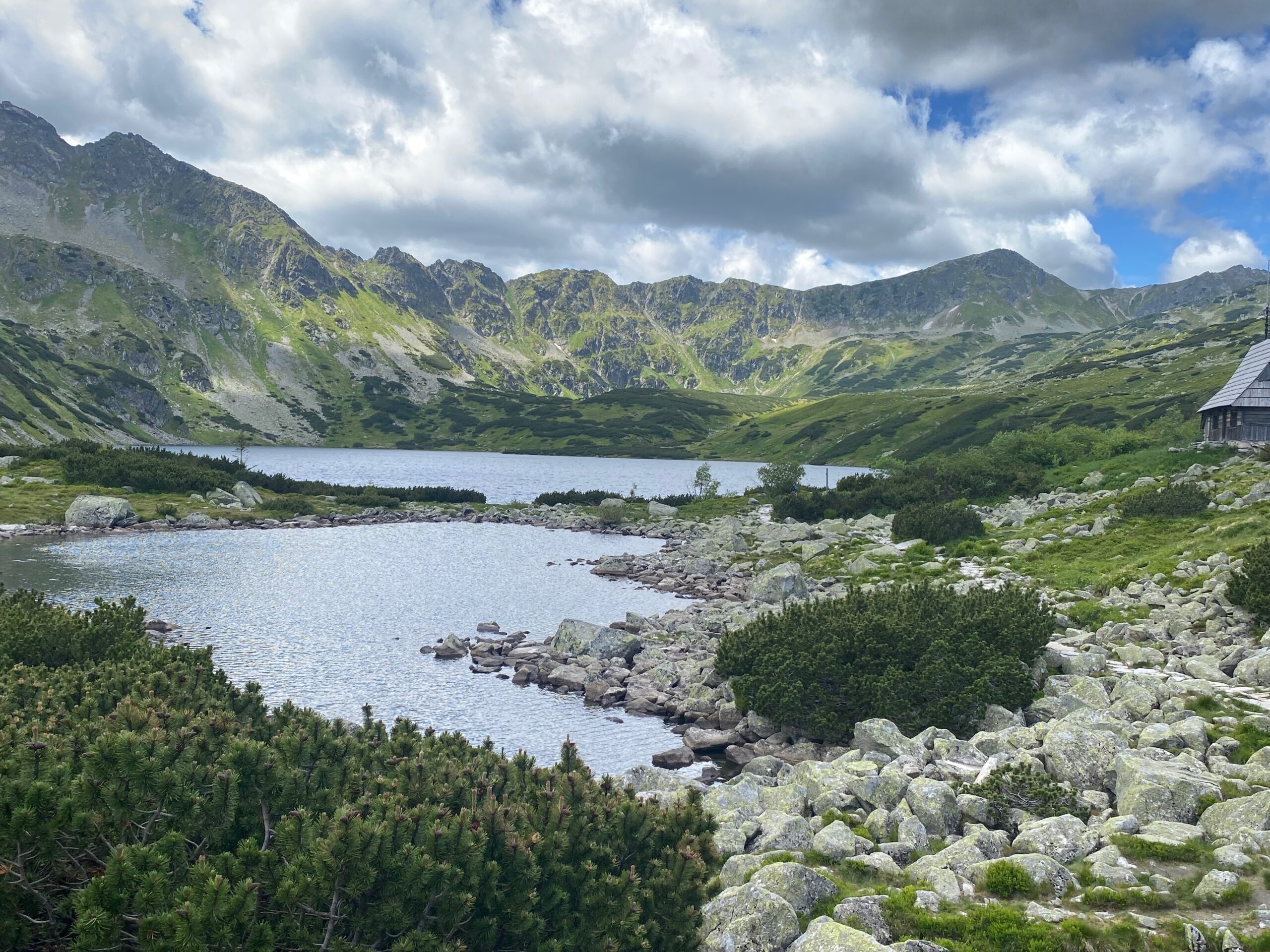
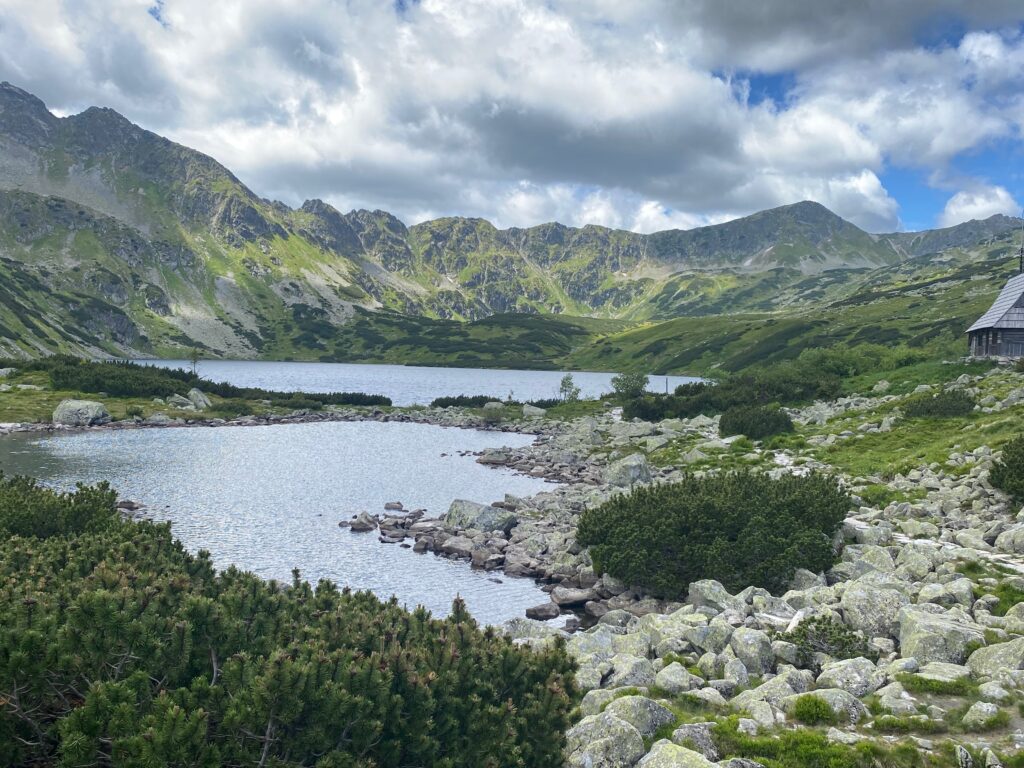
The Five Lakes: The valley’s five glacial lakes each have their own character. Wielki Staw (the Great Lake) is the largest and deepest lake in the entire Tatra Mountains — nearly 80 metres deep and over 34 hectares in size. Przedni Staw sits right next to the mountain hut and is the most accessible. Czarny Staw (the Black Lake) earns its name from its dark, shadowy waters. Mały Staw is the smallest, easy to miss between the others. And Zadni Staw, the most remote, sits at nearly 1,900 metres above sea level — the second-highest lake in Poland.
PTTK Mountain Hut (Schronisko w Dolinie Pięciu Stawów): Located on the shore of Przedni Staw at 1,671 metres, this is the highest-altitude mountain hut in Poland. It serves hot meals, soups, and drinks — a very welcome stop after the climb. Overnight stays are possible but must be booked well in advance.
The Route Sections
Full video about trail: here
Palenica Białczańska to Wodogrzmoty Mickiewicza (red trail, ~3 km): The first section follows the flat, paved road toward Morskie Oko. It is easy walking but can feel long, especially in peak season when the road is busy with other hikers and horse carriages. Start early to make the most of this section before the crowds build up.
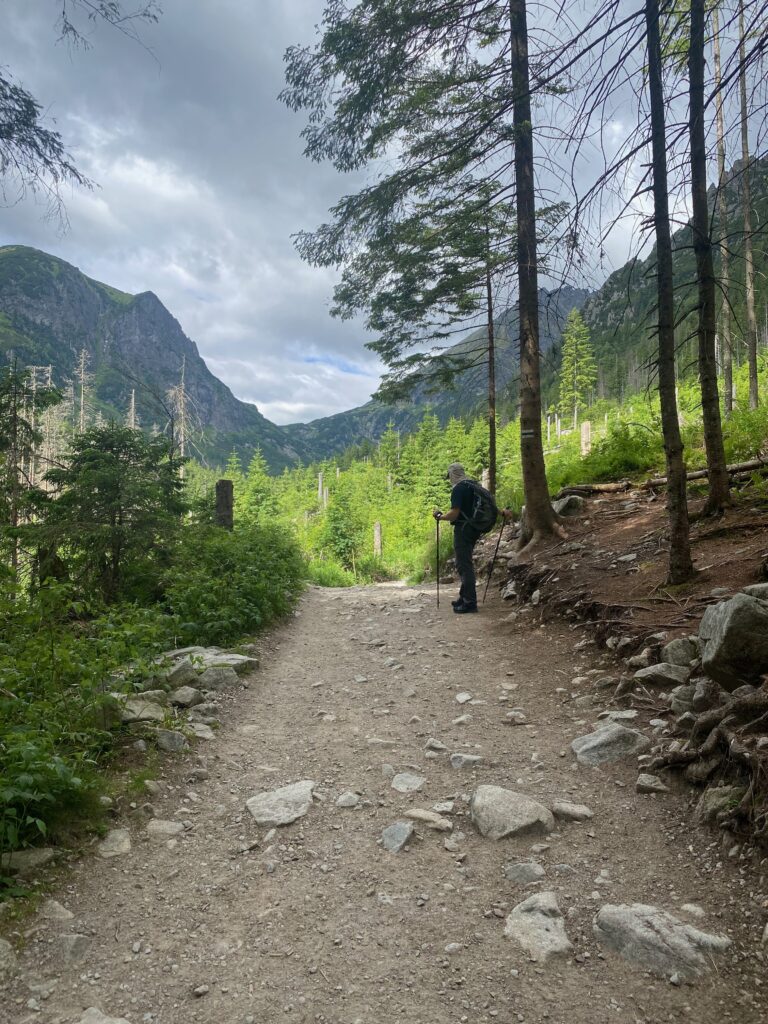
Roztoka Valley — the climb (green trail): After the waterfall, the trail turns sharply right and begins climbing through the forest. This is the most physically demanding part of the hike — steep, rocky, and sustained. The path follows the Roztoka stream upward, with the forest gradually giving way to open alpine terrain.
Siklawa Waterfall to the Valley: As the trail emerges above the tree line, the landscape opens up dramatically. The Siklawa Waterfall comes into view on the left, and the rocky glacial terrain above it leads into the valley proper. The walking here is more varied — a mix of rock slabs, scree, and grassy sections.
The Valley of Five Lakes: Once inside the valley, the trail levels off and winds past the lakes. Most hikers spend time at the mountain hut before continuing to explore the lakes at their own pace. The area around Wielki Staw and the hut offers the best views of the surrounding peaks, including Kozi Wierch and the ridges of Orla Perć.
Return via the black trail: The descent follows the steeper black trail, which drops quickly back into the Roztoka Valley before rejoining the paved road. The views on the way down are excellent.
When to Visit
- Avoid Crowds: July and August are the busiest months, and even this trail — which sees far fewer visitors than Morskie Oko — can get busy on summer weekends. For the best experience, visit in late June or September–October.
- Best Time: Autumn is particularly beautiful here, with crisp air, clear views of the peaks, and the first dustings of snow on the high ridges. The lakes also tend to be calmer and more reflective in autumn light.
- Conditions: In wet weather the rocky sections — particularly around the Siklawa Waterfall — become very slippery. The trail is closed between December 1st and May 15th due to habitat protection. Always check the Tatra National Park weather and trail advisory before setting out.
What to Bring
- Water: Carry enough water for the full climb. Water is available at the mountain hut in the valley, but there are no other facilities between the trailhead and the top.
- Food: This is a long day out — bring enough food for the full hike. The mountain hut serves hot meals, but the queue can be long in peak season. A packed lunch is a reliable backup.
- Footwear: Good hiking boots are essential. The rocky terrain, stone steps, and potentially wet conditions near the waterfall all require proper grip and ankle support.
- Layers: The valley sits above 1,600 metres. Even on warm days, temperatures drop significantly at the top — especially if clouds roll in. Bring a windproof layer.
- Protection: Sunscreen is important on the exposed upper sections of the trail.
- Early start: Aim to begin hiking by 7–8am at the latest. This avoids the worst crowds on the paved road section and gives you plenty of time to enjoy the valley without rushing the descent.
Is This Hike Worth It?
Absolutely.
The Valley of Five Polish Lakes is widely considered one of the most beautiful destinations in the entire Tatra Mountains — and for good reason. Five glacial lakes, two major waterfalls, dramatic rocky ridges, and a mountain hut at nearly 1,700 metres combine to make this a genuinely memorable full-day hike.
It is more demanding than most trails near Zakopane, but the effort is entirely proportional to the reward. And unlike Morskie Oko — which draws enormous crowds on the same paved road — the valley feels peaceful, wild, and worth every step of the climb.