Dunika Bog Trail – Nice 10 km Boardwalk Hike in Western Latvia
The Dunika Bog boardwalk is one of the longest bog boardwalk trails in Europe, stretching for about 5 km in one direction. Because the trail is linear, the usual route is to hike it out and back, making the total distance around 10 km.
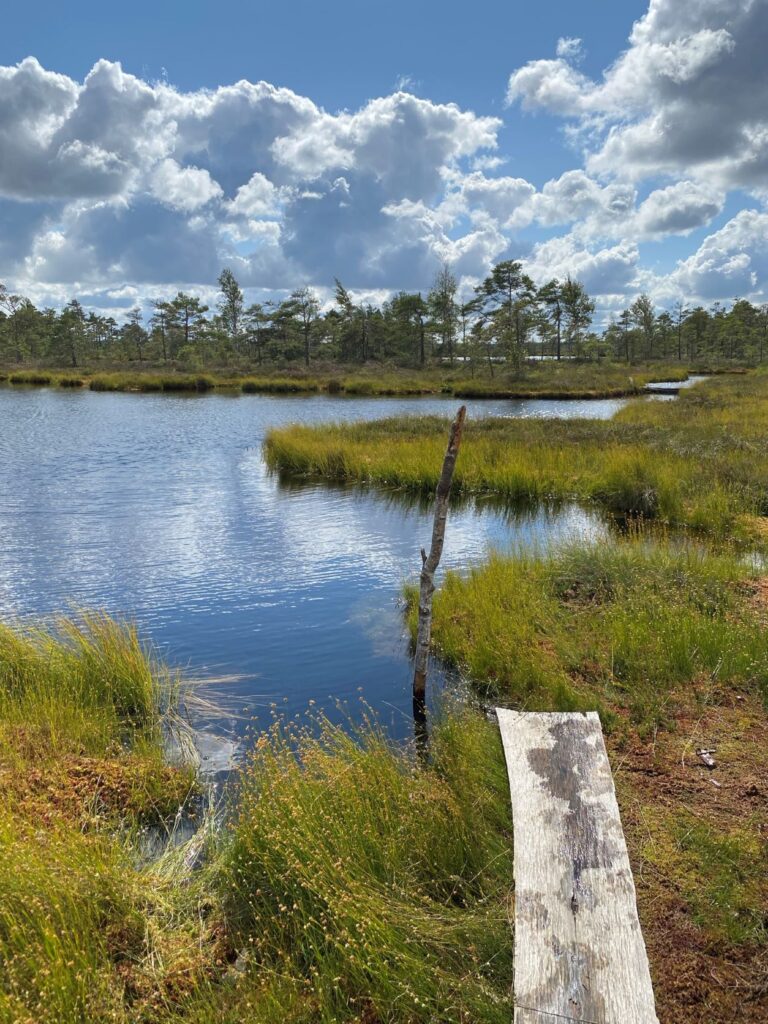
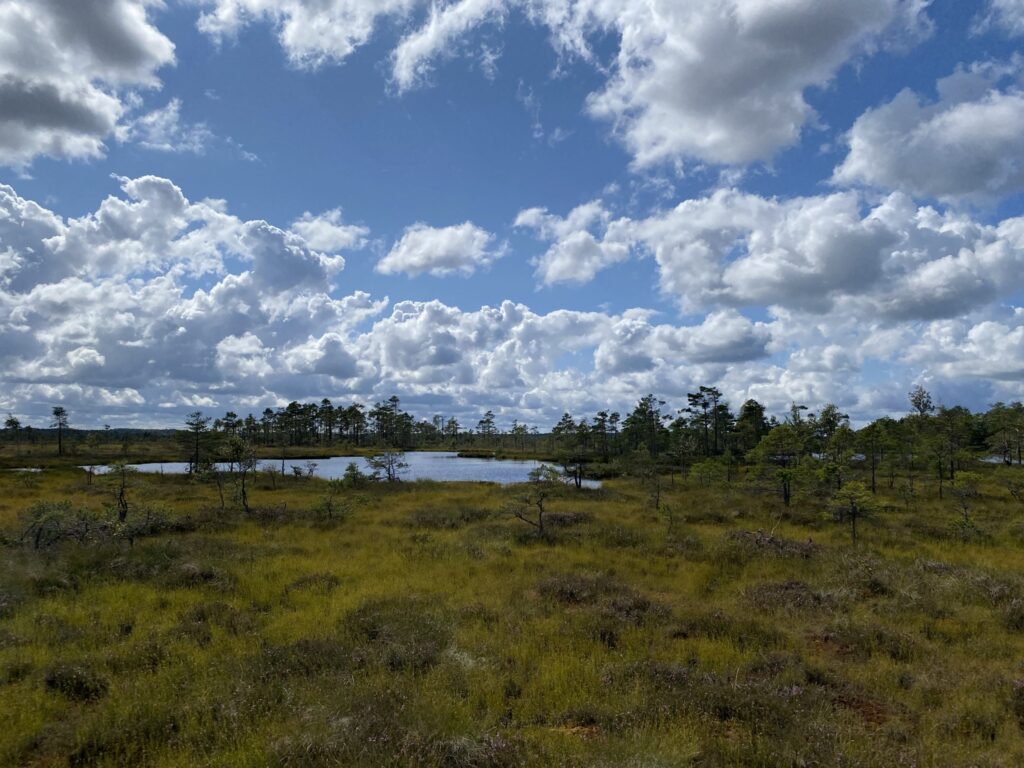
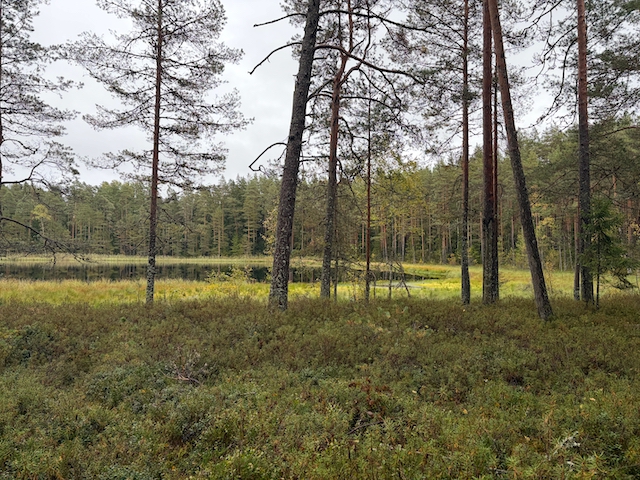
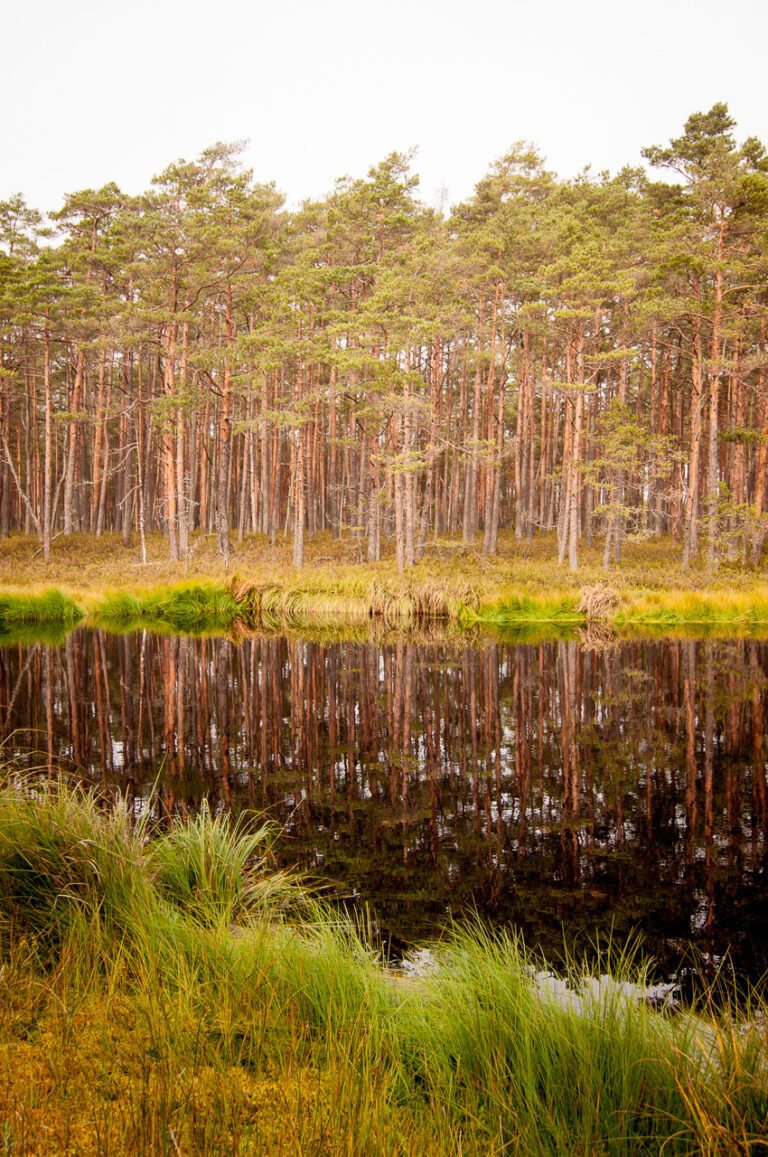
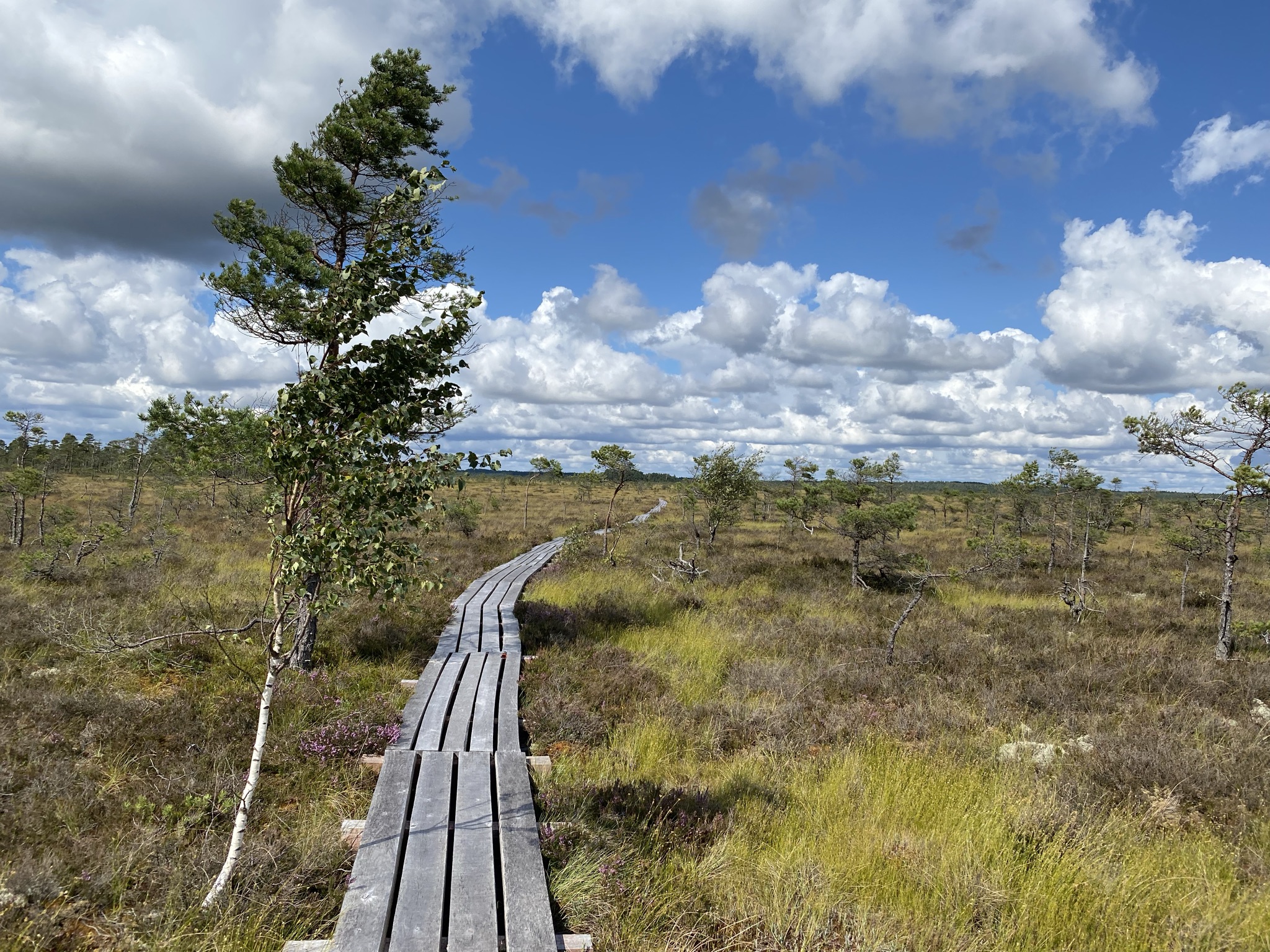
The bog itself — known locally as Tīrspurvs — is estimated to be around 7,000 years old, making it one of the most ancient raised bogs in Latvia. The trail passes through a landscape that feels genuinely timeless: small bog lakes, clusters of islands, twisted pine trees, and an open sky above the flat horizon.
Along the trail there are several picnic areas where visitors can take a break and enjoy the peaceful bog landscape. At one end of the trail you will also find the Lukna hornbeam forest, a unique natural site and the only hornbeam grove of this type in Latvia.
Quick Facts
- Location: 56.28120, 21.38282
- Distance: 5 km one way (10 km round trip)
- Elevation gain: Flat boardwalk terrain
- Time needed: ~1.5 hours one way
- Difficulty (1–5): 2
- Trail type: Linear trail, mostly wooden boardwalk through the bog
- Parking: Free parking at the trailhead
- Public transport: Not available
- Entrance fee: Free
- Best season: Year-round
- Dog friendly: Yes (on a leash)
- Family friendly: Yes, but not suitable for strollers
Parking & How to Get There
Dunika Bog Trail is best reached by car.
From Liepāja, drive along the A11 highway towards the Lithuanian border. After approximately 19.4 km, turn left at the sign “Grobiņa 52”. Shortly after, you will see a sign on the right pointing to the bog boardwalk parking area.
GPS: 56.28120, 21.38282
Note: The trail is located in the Latvia–Lithuania border zone, so visitors should carry a valid ID or passport.
Hiking the Trail
The trail is linear, and the starting point shown on the map is the recommended one.
The simplest way to experience the trail is to walk to the end and return along the same route, allowing you to fully enjoy the peaceful atmosphere of the bog landscape.
Another option is to use two cars, leaving one at the other end of the trail. Coordinates of the second trailhead: 56.240102, 21.403041
It is also possible to return via a gravel road that goes around the bog, though the boardwalk route is far more scenic.
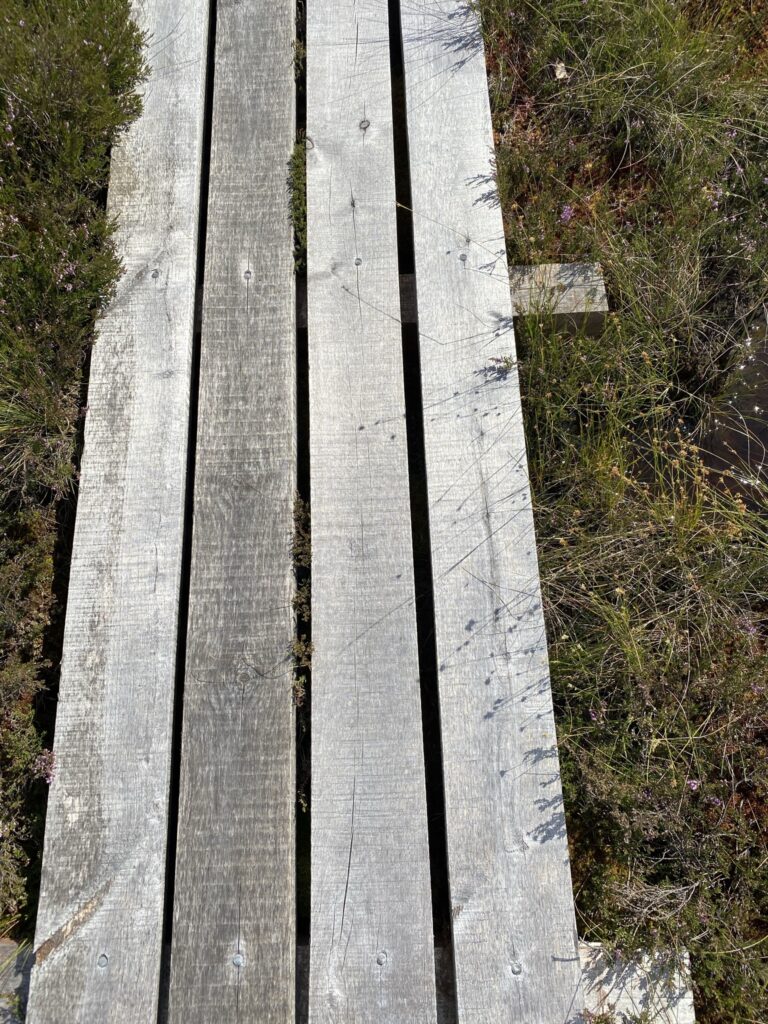
One practical note: some sections of the boardwalk in the central part of the trail have been reported to have worn or uneven planks. While the trail is generally well-maintained, take extra care underfoot — especially in wet conditions.
Highlights
Dunika Bog (Tīrspurvs): This 7,000-year-old raised bog is one of the largest and most beautiful bogs in the Kurzeme region. Raised bogs like this form over millennia as sphagnum moss accumulates and slowly builds up above the surrounding terrain. The open bog landscape — flat, silent, and seemingly endless — is unlike anything you find in the forest, and the sense of space and stillness is one of the main reasons people come here.
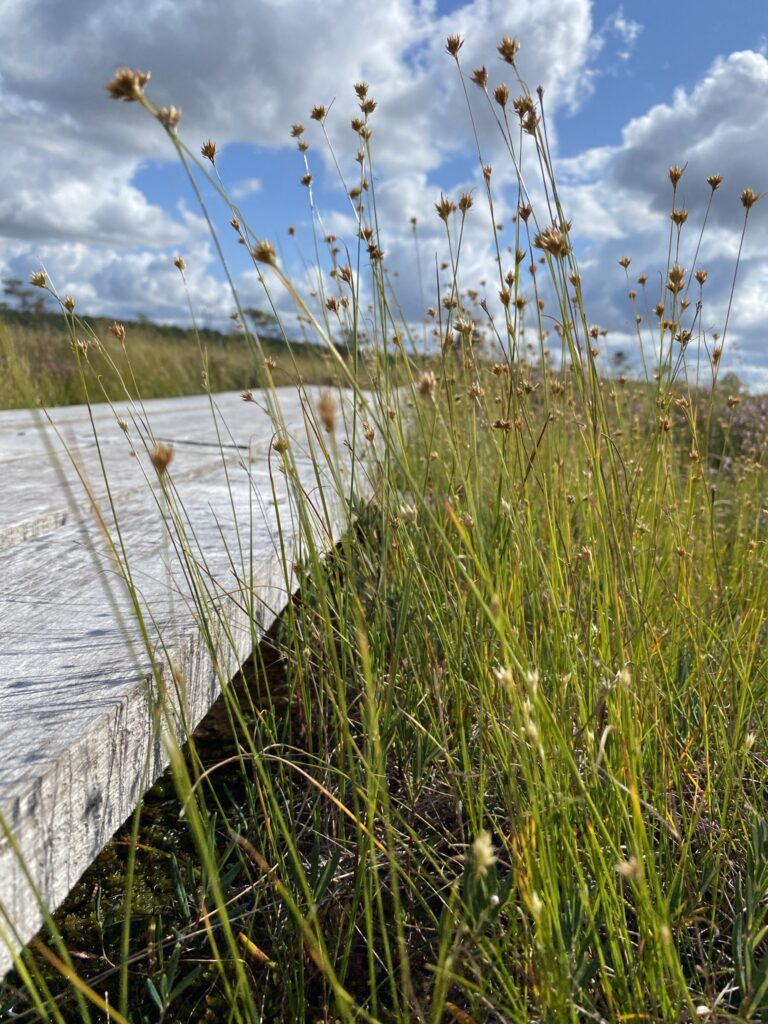
Bog Flora: The bog is home to a variety of protected plant species typical of Latvian raised bogs. Keep an eye out for round-leaved sundew (a small carnivorous plant that traps insects), hare’s-tail cottongrass with its distinctive white fluffy tufts, marsh Labrador tea with its fragrant white flowers, and wild cranberries growing low along the mossy ground. These plants are all specially adapted to survive in the poor, acidic, waterlogged soil of the bog.
The Ancient Pine Trees: The small, gnarled pine trees growing throughout the bog may look like young saplings — but many of them are over 100 years old. The nutrient-poor, acidic conditions of the bog slow their growth dramatically, so what looks like a young tree could be older than you’d expect.
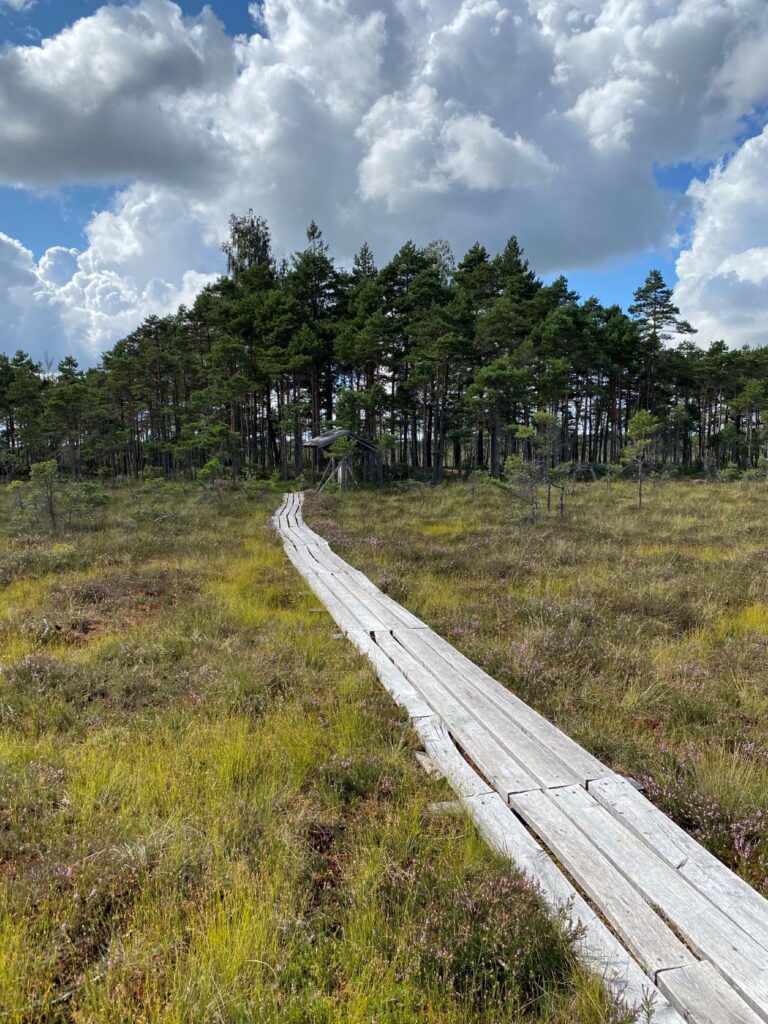
Dunika Bog Island: Roughly halfway along the trail, a short turn-off leads to a small island in the bog with a picnic area. A good spot to stop, sit in silence, and take in the landscape around you.
Lukna Hornbeam Grove: At the far end of the trail, the boardwalk leads into a completely different kind of forest — the Lukna hornbeam grove, which covers about 11 hectares and is the only pure hornbeam stand in all of Latvia. The trees are over 150 years old, with tall, smooth-barked trunks rising above the bog edge. Hornbeam trees are unusual in Latvia and this grove marks the extreme northwestern edge of the species’ natural range in Europe. The contrast between the open bog and this dense, ancient grove makes it a memorable endpoint.
Birdwatching: The bog and its surroundings are an excellent habitat for birds. Latvia sits on one of the world’s major bird migration routes, and bogs in particular are important breeding grounds for species such as common crane, golden plover, and wood sandpiper. Early morning visits — especially in spring and autumn — offer the best chances for birdwatching.
The Route Sections
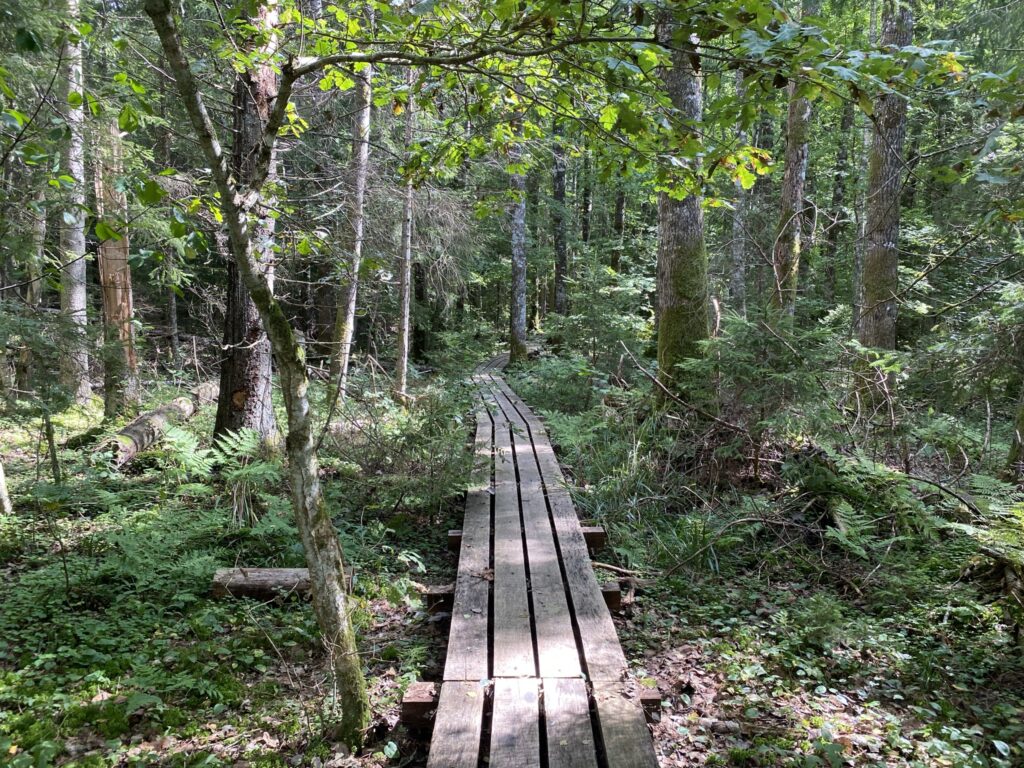
Forest Path to the Boardwalk: The trail begins at the parking area and first passes through a short section of forest before reaching the start of the bog boardwalk. This section is easy and gives your eyes time to adjust from the dense trees to the open bog ahead.
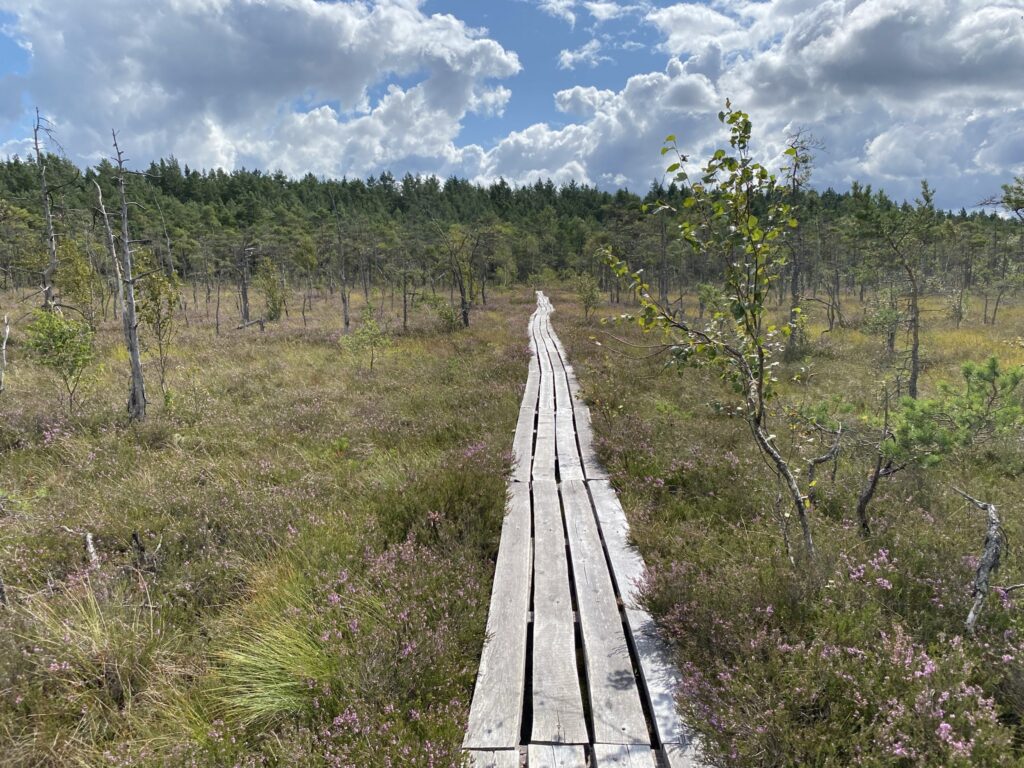
Dunika Bog Boardwalk: From the forest edge, the boardwalk stretches out across the bog in an almost perfectly straight line — you can see the path disappearing into the distance ahead of you in both directions. This is one of the most striking visual features of the trail. The landscape on either side shifts gradually as you walk — open bog pools, small bog islands, and patches of pine give way to each other in a slow, meditative rhythm. This is a trail for slowing down. There is no summit to reach, no dramatic viewpoint to chase — just the quiet of the bog and whatever you notice along the way.
Dunika Bog Island: Around the halfway point, a short detour leads to a small raised island in the bog with a picnic area. Worth the short diversion, especially if you want to stop for lunch.
Lukna Hornbeam Grove: The final section of the trail leads off the boardwalk and through the forest to the hornbeam grove. After the open, exposed landscape of the bog, walking into this tall, shaded grove feels like entering a different world entirely. Take time to look up at the canopy and appreciate just how different these trees look from the stunted pines you’ve been walking past for the last few kilometres.
When to Visit
- Avoid Crowds: This trail is relatively quiet year-round — you are unlikely to encounter large groups even in peak season. It is most peaceful on weekday mornings.
- Best Time: The bog is beautiful in every season. Spring brings bog flowers and the first migrating birds. Summer offers the longest days and the best chance to spot bog plants in bloom. Autumn turns the bog’s mosses and grasses into shades of gold, rust and amber — arguably the most photogenic time of year. Winter transforms the trail into a frost-covered landscape of extraordinary stillness.
- Conditions: The boardwalk can become very slippery in wet or frosty weather — take care with each step. There may be patches of mud on the forest sections, particularly in spring. Some planks in the central section of the boardwalk may be uneven; watch your footing.
What to Bring
- Water: No drinking water is available on-site. Bring enough for the full walk.
- Food: There are no cafes or kiosks at the trailhead or along the trail. Pack a picnic — the bog island stop halfway is a perfect place to eat.
- Footwear: Sturdy hiking shoes with good grip are recommended. Waterproof shoes are especially useful in spring and autumn when the forest sections can be muddy.
- Insect repellent: In summer, mosquitoes can be persistent in the bog — bring repellent and consider long sleeves. Tick protection is also advisable.
- Binoculars: If you have any interest in birds or bog flora, binoculars are well worth carrying. Early morning visits in spring and autumn offer the best wildlife sightings.
- Camera: The straight boardwalk disappearing into the distance, the bog pools reflecting the sky, and the hornbeam grove at the end all make for excellent photographs. Early morning or late afternoon light is best.
Is Dunika bog trail Worth It?
Absolutely.
This is not a trail for those seeking dramatic views or physical challenge. It is a trail for anyone who wants to slow down, step into a landscape that has barely changed in thousands of years, and spend a few hours in genuine quiet.
The combination of the long, straight boardwalk through the ancient raised bog and the surprising hornbeam grove at the end makes it one of the most distinctive nature walks in western Latvia. Families with children can easily shorten the hike by turning back at the bog island rather than walking the full distance.
If you are driving between Liepāja and the Lithuanian border, the Dunika Bog Trail is one of the best detours you can make.