A Short but Remarkable Walk in Čepkeliai – Lithuania’s Largest Bog
Čepkeliai is not the kind of place you stumble across. It takes a deliberate effort to get there — a drive through pine forest on a gravel road to the edge of southern Lithuania, close to the Belarusian border. But that remoteness is part of what makes it special.
The educational trail here is only 3.7 km long, but it gives access to something genuinely rare: a glimpse into one of the largest and most untouched raised bogs in the entire Baltic region. The trail is short, flat, and easy — but the landscape it passes through is anything but ordinary.
Quick Facts
- Location: 54.021080; 24.412721
- Distance: 3.7 km
- Elevation gain: Flat
- Time needed: ~1 hour
- Difficulty (1–5): 1
- Trail type: Circular loop — forest paths, wooden boardwalk, and an observation tower
- Parking: Free parking at the trailhead
- Public transport: Not available — a car is required
- Entrance fee: Free (guided excursions are a paid service — see visiting rules below)
- Best season: Year-round, with seasonal restrictions
- Dog friendly: Yes (on a leash)
- Family friendly: Yes, but not suitable for strollers
⚠️ Important: Visiting Rules
Čepkeliai is a strict state nature reserve — one of the most protected natural areas in Lithuania — and visiting rules must be followed carefully.
From April 1 to August 1: the trail may only be visited with an accredited guide from the Dzūkija National Park Directorate. Pre-registration is required and guided excursions are a paid service (from €6 per adult). Tours run Tuesday to Saturday at 10am, 1pm, and 3pm.
From August 1 to March 1: individual visitors may walk the trail independently, without a guide, but only during daylight hours (no earlier than 1.5 hours before sunrise and no later than 1.5 hours after sunset), and must stay on the marked trail at all times.
For up-to-date visiting information, contact the Dzūkija National Park visitor centre in Marcinkonys:
- Tel: +370 672 46388
- Email: info@dzukijosparkas.lt
- Or check the official reserve website for current rules before you go
Border zone note: The trail is located close to the Lithuanian–Belarusian border. Carry a valid ID card or passport at all times.
Parking & How to Get There
The trailhead is accessible only by car. The nearest village is Marcinkonys, which is located about 34 km from Druskininkai and 25 km from Varėna. From Marcinkonys, follow the road toward the reserve — the final section is a gravel forest road leading to a small free car park at the trailhead.
If visiting with a guide, you can register and pay at the Dzūkija National Park visitor centre in Marcinkonys before driving to the trailhead.
GPS (start): 54.021080; 24.412721
About Čepkeliai
Čepkeliai is the largest bog in Lithuania, covering nearly 6,000 hectares of raised peatland. The reserve itself — including the surrounding pine forests, inland dunes, and relict lakes — covers over 11,000 hectares and has been a Ramsar Convention wetland of international importance since 1993. It also holds Natura 2000 status as a protected site for birds.
Hiking the Trail
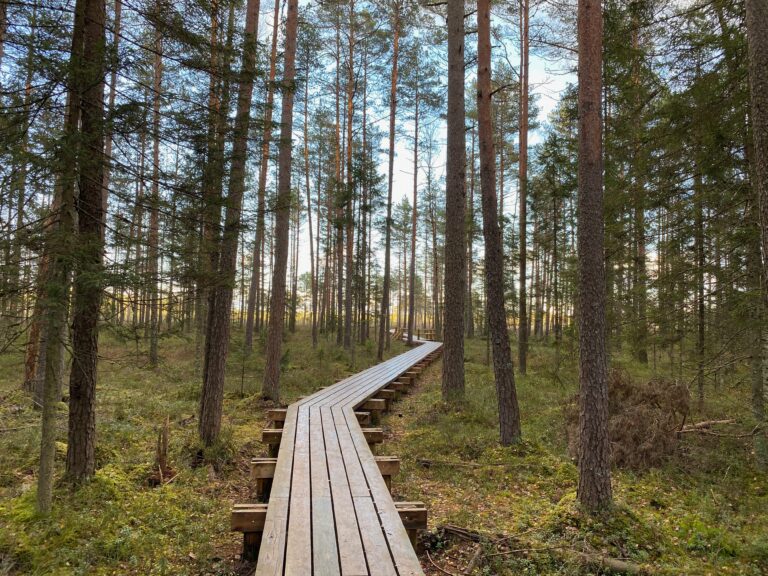
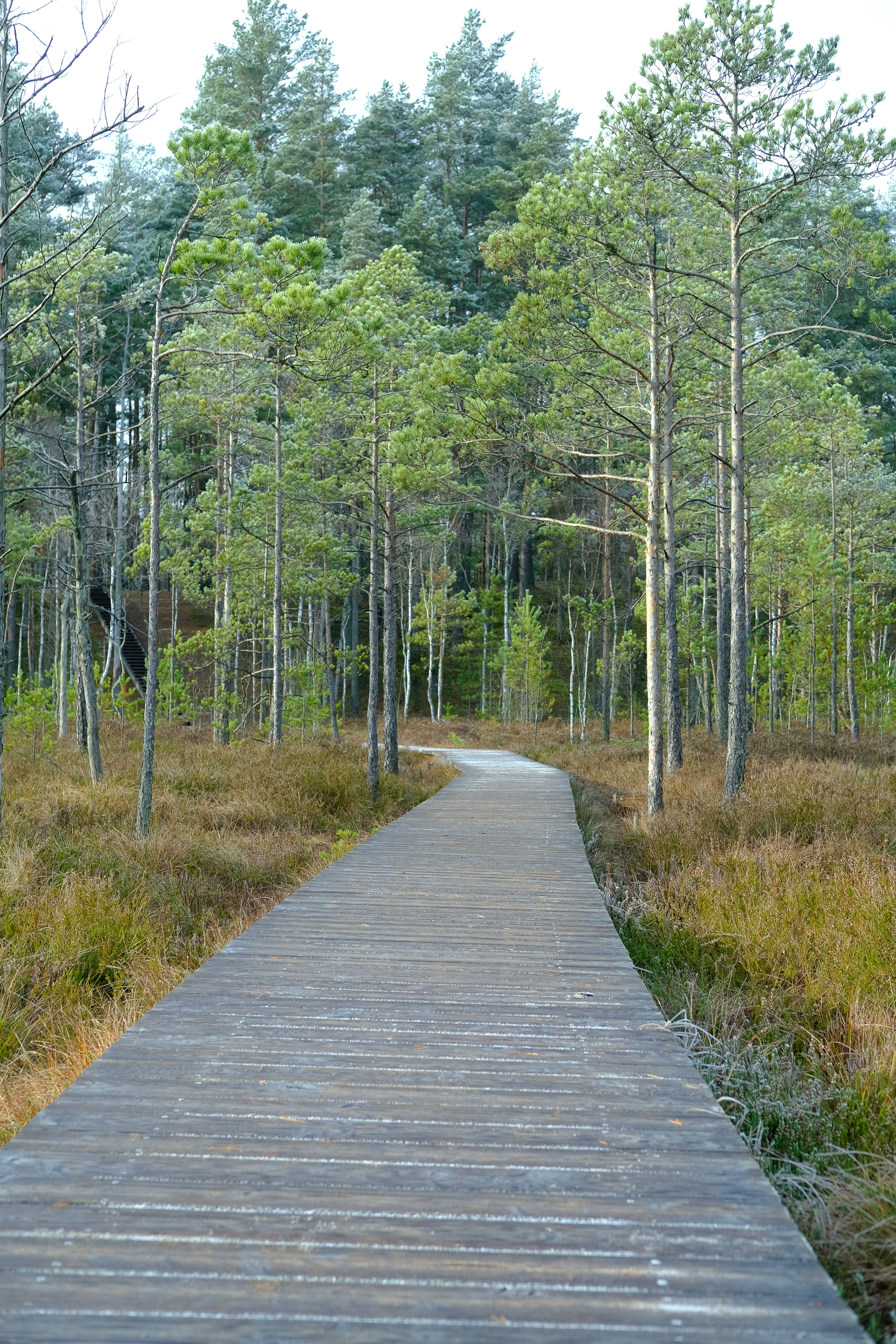
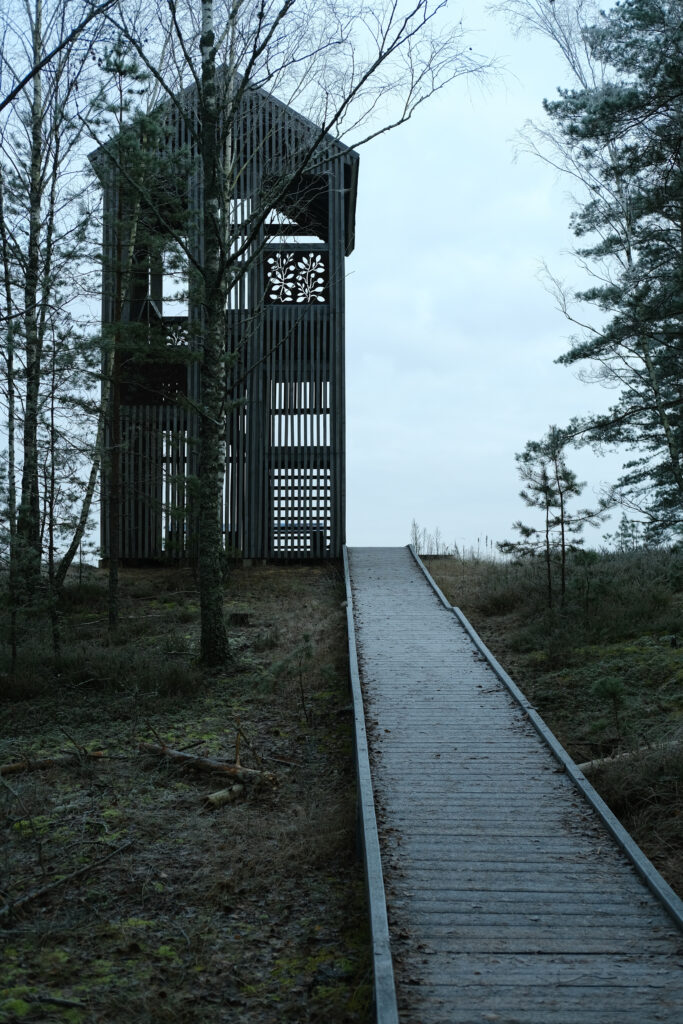
The trail is a loop starting from the car park. It begins in a quiet pine forest before opening up onto the 1.5 km wooden boardwalk that crosses the edge of the bog itself. The boardwalk then leads to the observation tower, from which you can take in the full scale of the landscape. The return route passes back through pine forest and over the continental sand dunes that surround the bog.
The trail is easy and flat throughout. What makes it interesting is not the physical challenge but the surroundings — the silence, the scale of the open bog, and the sense of being in a place that has been deliberately kept as wild as possible.
Highlights
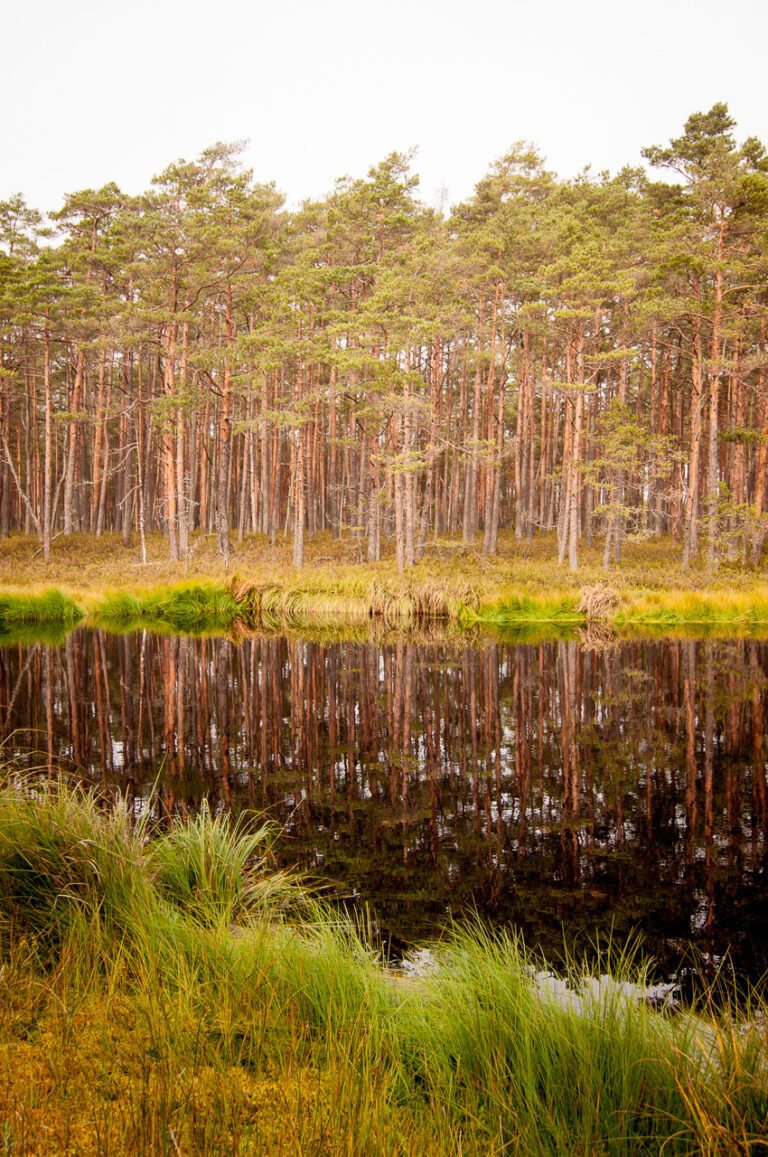
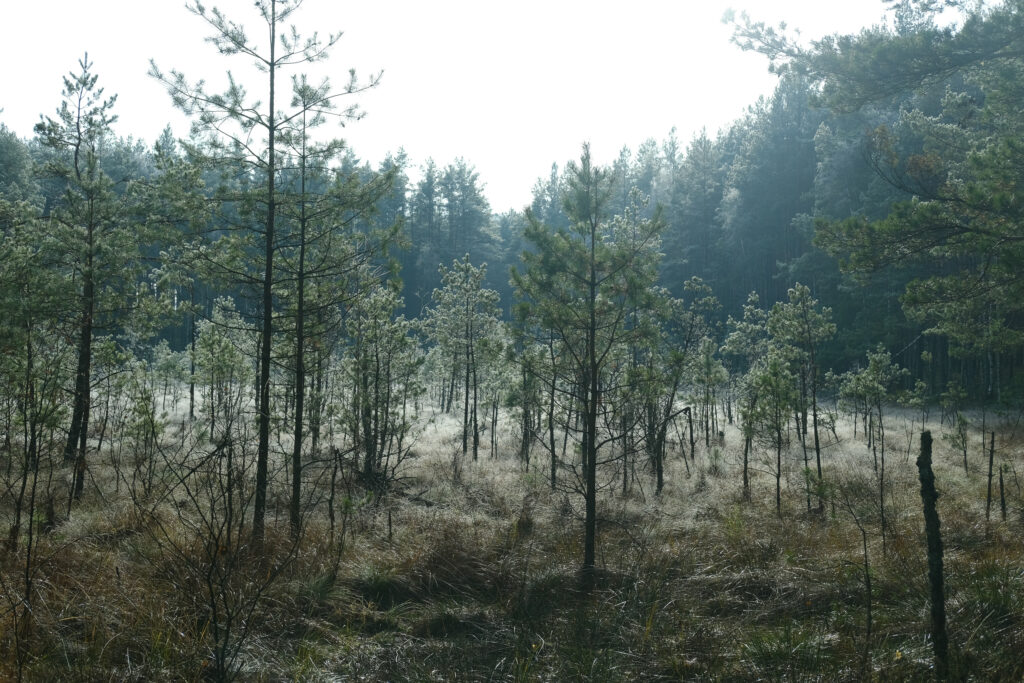
The Bog Boardwalk: The 1.5 km wooden walkway is the heart of the trail. It leads out across the marsh, through an open landscape of sphagnum moss, low bog pines, and scattered pools. The small pine trees growing here may look young but many are decades old — slowed to a crawl by the nutrient-poor, waterlogged ground. Up close, the bog surface is full of detail: look for the sticky red rosettes of sundew, the white cotton-grass tufts that wave in any breeze, and the low, pink-flowered bog rosemary. In autumn, cranberries grow across the moss in dense patches.
The Observation Tower: The 8-metre tower at the edge of the bog offers a view that is difficult to find anywhere else in Lithuania — a wide panorama of open wetland stretching to the horizon, dotted with forested islands that rise from the peat like small green hills. On misty mornings the effect is extraordinary. The marsh seems to go on forever, and the scale of it — knowing that this is all largely untouched — is genuinely affecting.
Forest and Sand Dunes: The return section of the trail passes through dry pine forest growing on inland continental dunes — a striking contrast to the open bog. These sandy ridges accumulate heat in summer and support plants and animals with more southern affinities, which adds to the unusual biodiversity of the area. The combination of bog and dune in such close proximity is one of Čepkeliai’s defining ecological characteristics.
Wildlife: The reserve is one of the best places in Lithuania to hear or see cranes, black grouse, and capercaillie — though sightings depend heavily on the season and time of day. Early morning visits offer the best chances. The guided tours in spring (when the reserve is otherwise closed) are particularly valuable for birdwatchers, as this is when many of the rarest species are most active.
The Route Sections
Pine Forest to the Boardwalk: The trail starts in a quiet, shaded pine forest and leads gradually toward the bog edge. The transition from dense trees to open marsh happens over a short distance and the change of atmosphere is immediate — the air feels different, the sound changes, and suddenly the sky opens up.
The Bog Boardwalk (1.5 km): The main section of the trail crosses the edge of the Čepkeliai Marsh on a raised wooden walkway. This is where the trail earns its reputation. The landscape here has an otherworldly quality — flat, open, ancient, and very quiet. Stay on the boardwalk at all times; the bog surface beyond it is unstable and venturing off-trail is both dangerous and prohibited.
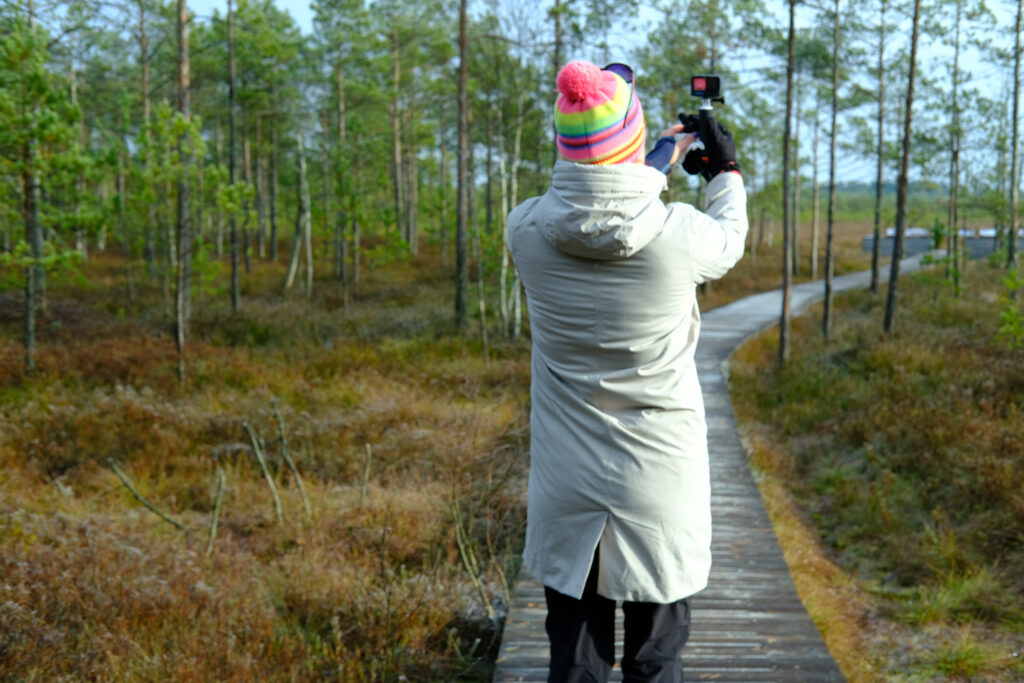
Observation Tower: Located at the far end of the boardwalk, the tower is a natural pause point. Climb to the top and take time to look in all directions — the forest islands rising from the bog are a distinctive feature of Čepkeliai and look very different from above than they do from the ground.
Return Through Forest and Dunes: The loop back to the car park passes through pine forest and the sandy dune terrain surrounding the bog. Quieter than the boardwalk section, but worth taking slowly — this is where you’re most likely to hear birds in the trees above.
When to Visit
- April 1 – August 1: Guided visits only. If you want to visit during spring, book a guided excursion through the Marcinkonys visitor centre in advance. This is also the most rewarding time for birdwatching, as cranes and black grouse are most active.
- August 1 – March 1: Independent visits are permitted. Late summer and autumn are excellent — the cranberries ripen in September, the bog takes on warm amber and rust colours, and the crowds (such as they are) are minimal.
- Winter: The bog frozen and snow-covered is a completely different but equally impressive landscape. The boardwalk can be icy — take care.
- Conditions: In wet weather the boardwalk becomes slippery. The forest sections may have muddy patches. Stay on the marked trail at all times — this applies especially in the bog sections.
What to Bring
- ID or passport: Mandatory — the trail is near the border zone.
- Water: No facilities on-site. Bring enough for the walk.
- Waterproof shoes: The forest sections can be wet and muddy, particularly in spring and autumn. The boardwalk itself stays drier but grip is important.
- Binoculars: If you have any interest in birds, bring them. This is one of the best birdwatching locations in Lithuania.
- Insect repellent: Essential in summer — bogs are prime mosquito habitat, and the forest sections add ticks to the equation. Long sleeves are a sensible addition.
- Camera: The observation tower view, the bog landscape in morning mist, and the autumn cranberry colours are all genuinely worth photographing.