Sigulda Classic: From Gutman’s Cave to the Medieval Castle
Sigulda is arguably the most famous hiking destination in Latvia, and for good reason. While I love getting lost in the wilder, more remote ravines, sometimes a classic route is exactly what you need to recharge.
This trail is a beautiful blend of Sigulda’s most iconic natural landmarks and its rich medieval history — an easy, scenic loop that takes you from the Gauja valley floor all the way up to the castle walls. It’s the kind of walk that works equally well as a solo morning out or a relaxed family day trip from Riga.
Quick Facts
- Location: 57.15639, 24.85321
- Distance: ~8 km (circular)
- Elevation gain: 173 m
- Time needed: ~2 hours
- Difficulty (1–5): 2
- Trail type: Circular loop. Paved paths through town, a wide asphalt descent into the valley, forest trail and stairs up to the castle, then paved again back to the start.
- Parking: Free parking at the trailhead
- Public transport: Yes — the trailhead is a few hundred metres from Sigulda train station
- Entrance fee: Free
- Best season: Year-round
- Dog friendly: Yes (on a leash)
- Family friendly: Yes — mostly yes for strollers, but see the note below
Parking & How to Get There
Sigulda is about 50 km from Riga — an easy drive or a comfortable train ride.
If you’re coming by train, the trailhead is just a few hundred metres from Sigulda central station, which makes this one of the rare hiking routes in Latvia that genuinely doesn’t require a car. Trains run regularly from Riga. Check the current timetable at https://www.vivi.lv/en/ . If coming by bus, make sure your bus goes into Sigulda town centre rather than stopping on the bypass road.
If you’re driving, there is free parking available right at the trailhead and at several other spots around town.
GPS (start): 57.15639, 24.85321
About the Trail: Nature Meets History
Most people visit Sigulda either for the views or the castles. This route combines both — which is what makes it more interesting than doing either separately.
The trail follows the Gauja valley floor past Gutman’s Cave, then climbs back up through the forest to the castle ruins and gardens before looping back through the town. It’s varied enough to stay interesting throughout, and the mix of sandstone cliffs, river views, and medieval stonework gives the walk a real sense of place.
Trail Map
The trail is a loop and can be walked in either direction, though I recommend the route as mapped — descending first via Serpentīna ceļš to the valley, then climbing back up to the castle at the end.
Highlights
The Descent via Serpentīna ceļš: The walk starts in town and leads gradually toward the edge of the Gauja valley. The descent follows Serpentīna ceļš — a wide, paved path that winds down through the trees, offering glimpses of the river and sandstone cliffs below. It’s a gentle introduction to what’s coming, and the shift from town to valley happens gradually enough that it feels like proper transition.
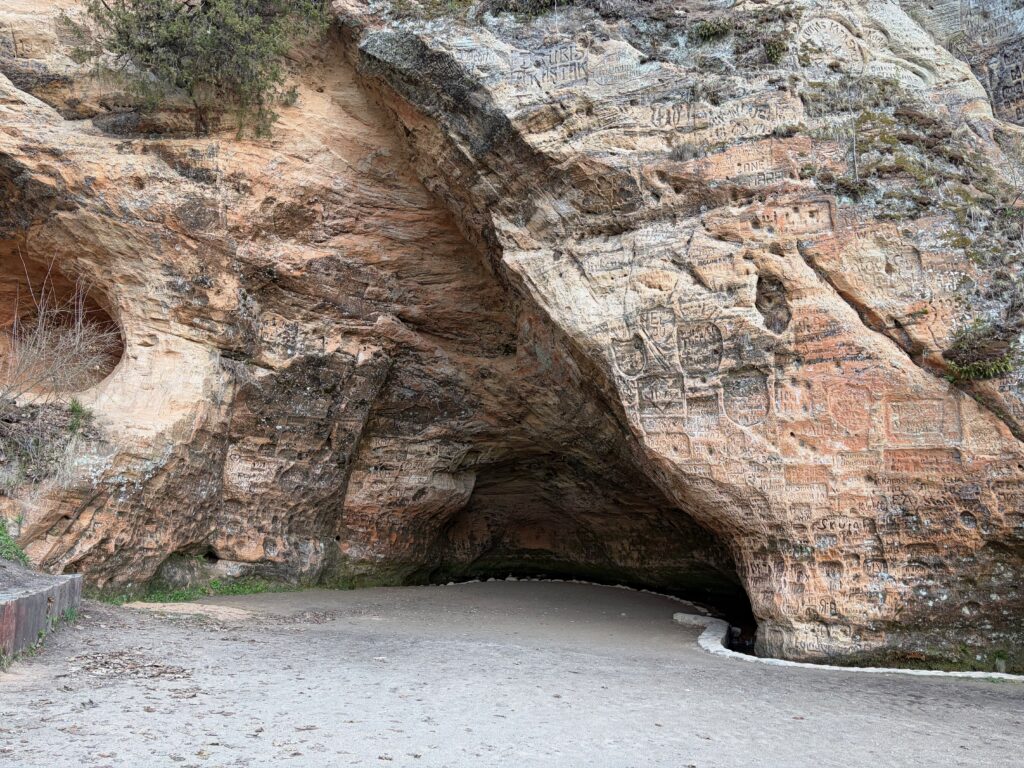
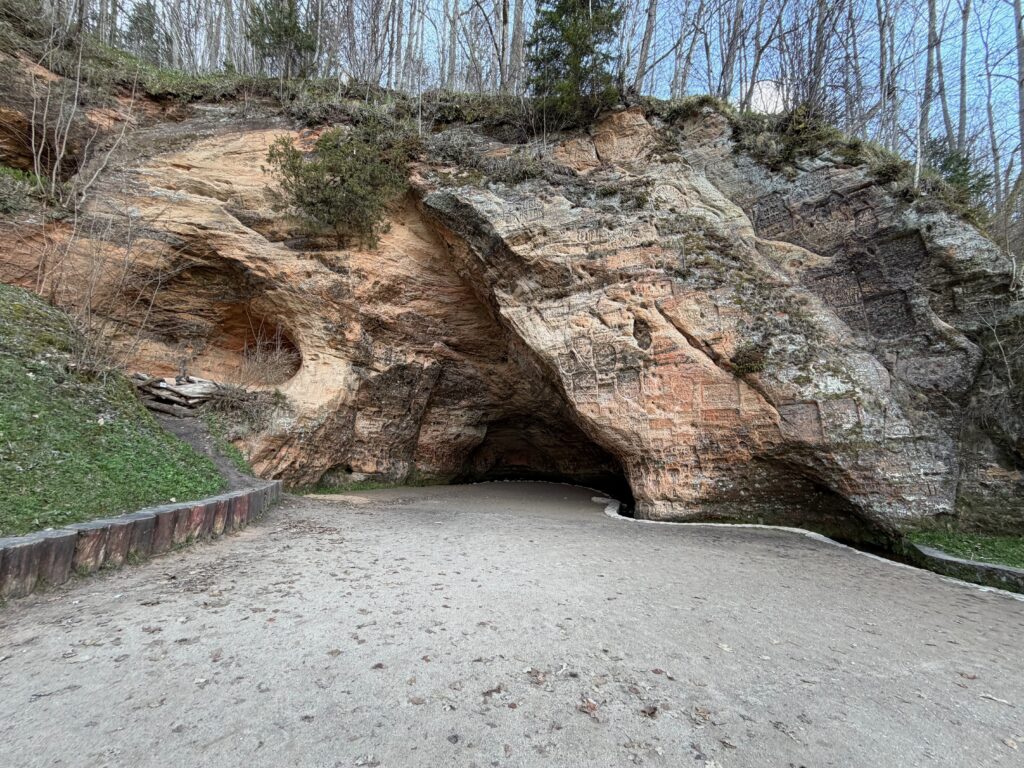
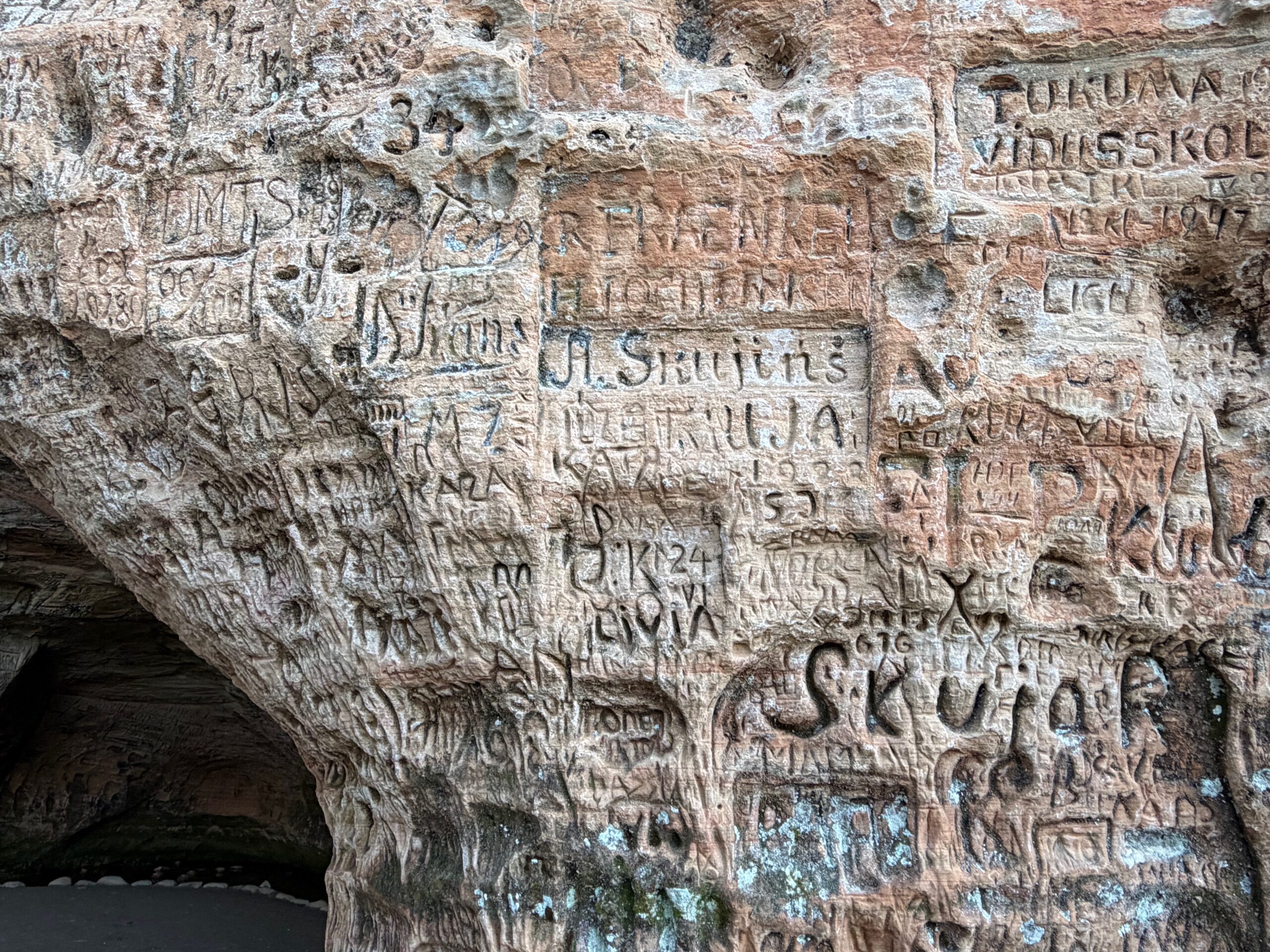
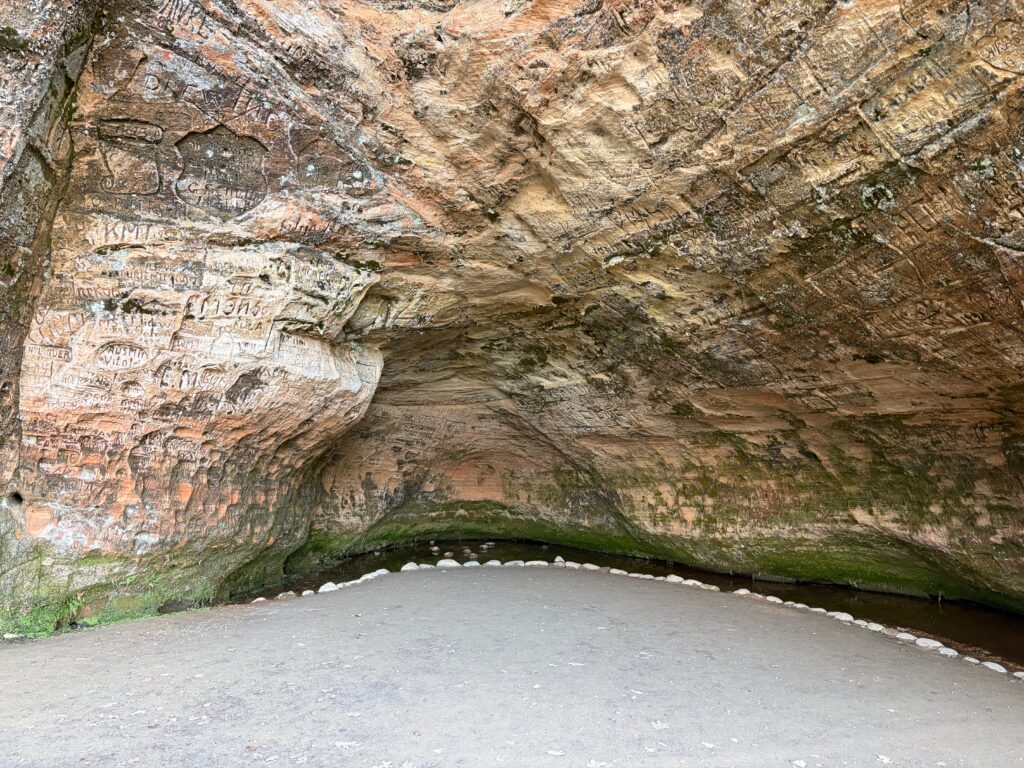
Gutman’s Cave (Gūtmaņa ala): The first major stop and one of the best-known natural landmarks in Latvia — the largest grotto in the Baltics, carved into red sandstone by the Gauja River over thousands of years. The cave walls are covered in inscriptions dating back to the 16th century, left by visitors over the centuries. Even if you’ve been here before, the cool air and the scale of the sandstone walls always feel grounding. It’s one of those places that earns its reputation.
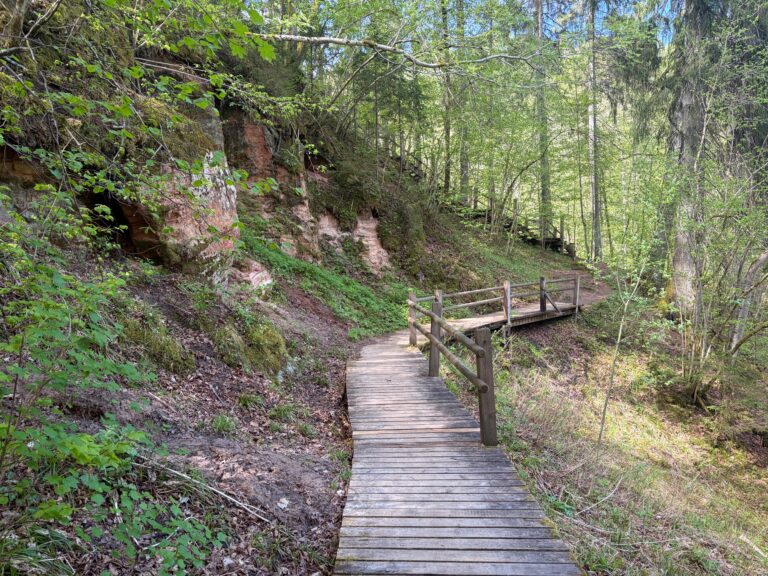
Sigulda Castle Quarter: The climb back up to the castle is the most physically engaging part of the route — a forest trail followed by a short set of stairs — but the reward is immediate. The Castle Quarter brings together the ruins of the Medieval Livonian Order Castle and the New Castle with its gardens and terrace, which has one of the best views in the entire Gauja valley: Turaida Castle visible across the valley on the opposite ridge, framed by trees. There are also craft workshops, a café, and usually a welcome bench or two.
Return Through Town: The final stretch loops back through Sigulda town past the church, the fountain, and the Devons cultural centre before returning to the start. It’s a pleasant ending that gives you a feel for the town itself rather than just the valley.
The Route Sections
Town to the valley (Serpentīna ceļš): Easy downhill on paved paths. A good warm-up with increasingly good views through the trees.
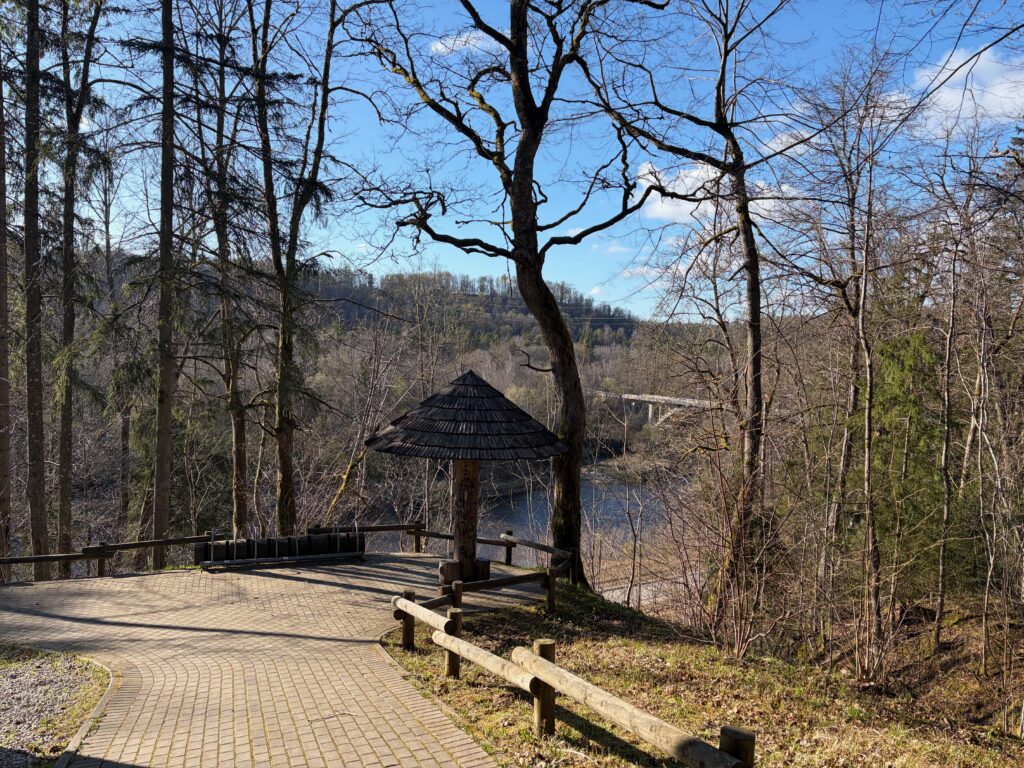
Valley floor to Gutman’s Cave: Flat, wide, paved. The most popular section of the route and the busiest, particularly on weekends.
Climb to Sigulda Castle: Forest trail and stairs — the only real elevation gain on the route. Short but noticeable. The view from the top makes it worthwhile.
Castle Quarter and return through town: Flat again. Good for a coffee stop before heading back.
👶 Stroller & Accessibility Note
Most of this trail is stroller-friendly — the valley paths are wide and paved, and Serpentīna ceļš is manageable in both directions.
The exception is the climb from the valley to the castle, which involves a forest trail and stairs. If you’re with a stroller, skip this section and instead follow Pils iela (the main road) up to the Castle Quarter — it’s a longer but comfortable alternative that brings you to the same destination.
Practical Tips
- Food & drink: The Castle Quarter has several good spots for a coffee or a meal after the walk. There are also a few options in town near the station.
- Timing: Beautiful year-round, but particularly good during golden autumn or when the spring greenery is fresh. Weekday mornings are quieter than summer weekends.
- Combining with more: If 8 km feels short, Sigulda has several additional trails in the area — the Turaida side of the valley is worth a separate visit, and the cable car across the Gauja offers a different perspective on the whole route.
Is This Walk Worth It?
Absolutely.
Whether it’s your first time in Sigulda or your tenth, this route covers the best of what the town has to offer in a single, well-paced loop. It’s easy enough to do casually, varied enough to stay interesting throughout, and the castle view at the end is a proper payoff for the climb.
For anyone visiting from Riga for the day, this is the route I’d recommend as a starting point — and probably as a reason to come back.