Passeig Ecològic de Benissa: Coastal Walk Past Quiet Coves and Views of Peñón de Ifach
Benissa is better known for its old town inland, but its short stretch of coastline has one of the nicest coastal walks on the Costa Blanca. The Passeig Ecològic is a marked coastal path that links a string of small coves between Les Bassetes and Cala de l’Advocat, with low cliffs, pine trees, wooden railings, stone steps and the unmistakable shape of Peñón de Ifach on the horizon.
We didn’t walk the whole path, just one section of it. We took the tram to Calp and a local bus to the coast, started at the northern edge of Calp and walked along the coast past Cala de la Fustera and Cala dels Pinets to Cala de la Llobella. Then we walked back to La Fustera and caught the bus from there. That made about 5 km in total, and if you have more time, the path continues further along the coast.
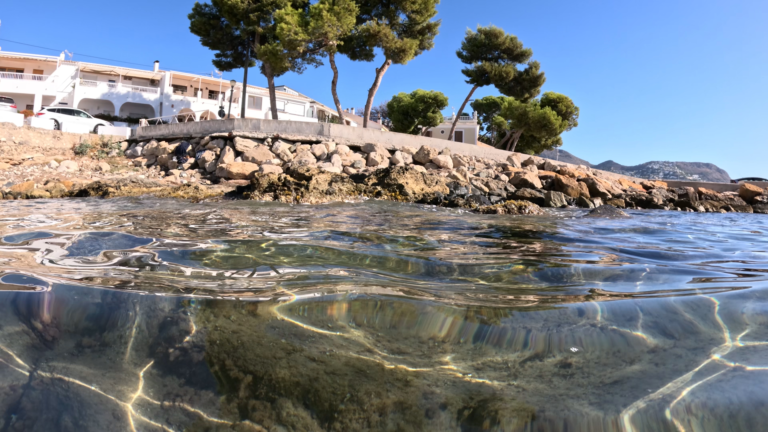
We really loved this walk. There are beautiful views almost all the way, and so many small beaches that everyone can find one that suits them. We stopped for a swim in several places and did a bit of snorkelling too.
If you’re staying in Benidorm or Calp and want a walk by the sea with plenty of swimming stops, this is a lovely option, and you can easily combine it with Calp old town afterwards, as we did.
Quick Facts
- Distance: 5.1 km (the section we walked)
- Time: 3 h including stops
- Difficulty: Moderate. The path is well kept, but it keeps going up and down, with lots of stone steps and a few uneven stretches near the coves.
- Route type: Point-to-point, with a short out-and-back from Cala de la Fustera to Cala de la Llobella
- Surface: Gravel and dirt paths, stone steps with wooden railings, short rocky sections and a few stretches along residential streets
- Waymarking: The route is marked and has information panels along the way. There’s also a tourist information point near Cala de la Fustera.
- Start/finish: Northern edge of Calp / Cala de la Fustera
- Start GPS: 38.65230, 0.07735
- Public transport: TRAM line 9 from Benidorm to Calp, then Calp local bus L1 to the coast; bus L3 back from Cala de la Fustera
- By car: There are car parks near Les Bassetes, Cala de la Fustera and Cala de l’Advocat.
- Best season: Spring and autumn for walking; summer if you want to combine it with a swim, but start early.
- Best for: A coastal walk with sea views, swimming and snorkelling stops, easily combined with Calp
Getting There
By tram and bus
We did the whole trip by public transport. From Benidorm we took the TRAM line 9 to Calp. It runs along the coast between Benidorm and Dénia, and the ride itself is very scenic.
From Calp, we took the local bus L1 to the coast and started walking from the northern edge of town. On the way back, we caught the bus L3 at Cala de la Fustera, which took us back to Calp. Local buses along this coast don’t run very often, and routes and timetables can change between seasons, so check the current timetable before you go.
By car
There are car parks near Les Bassetes, by Cala de la Fustera and at Cala de l’Advocat. In summer they fill up quickly, so arrive early.
📍 Start GPS: 38.65230, 0.07735
The Walk: Along the Benissa Coast
Prefer using an app? Open the route in Komoot.
From Calp towards Les Bassetes
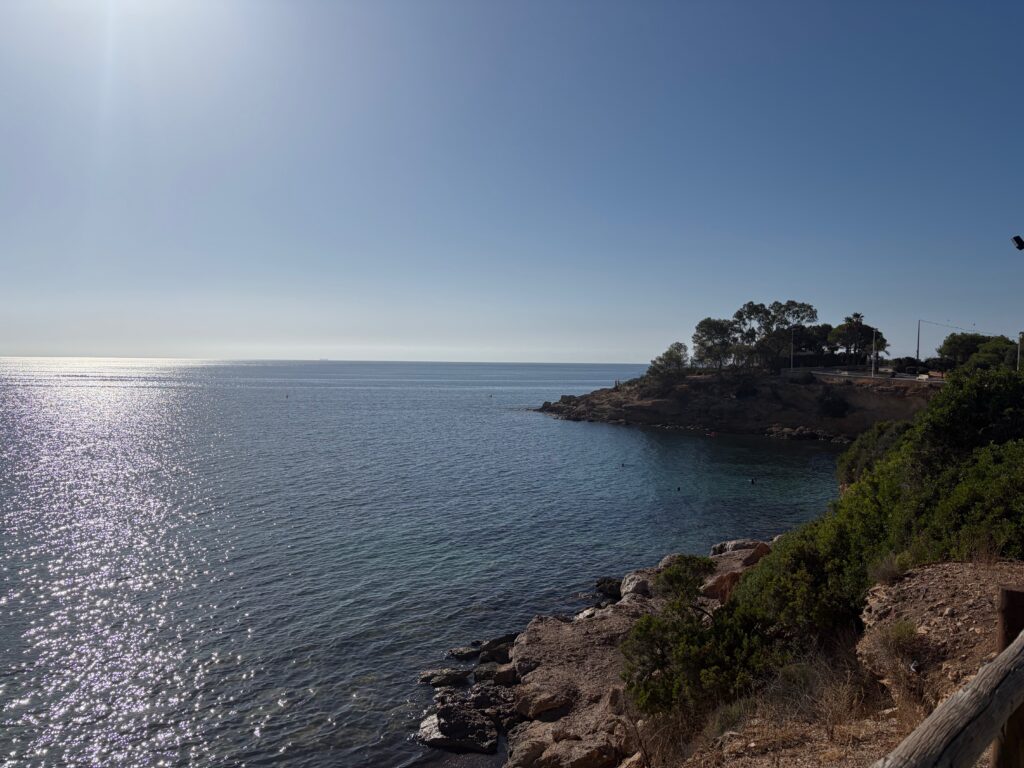
The walk starts at the northern edge of Calp, high above the sea. Right from the beginning you can see the shape of the coast ahead: small bays, low cliffs and pine-covered headlands. Below the path there are a few small beaches where people were already swimming in the morning.
Wide paths and the view of Peñón de Ifach
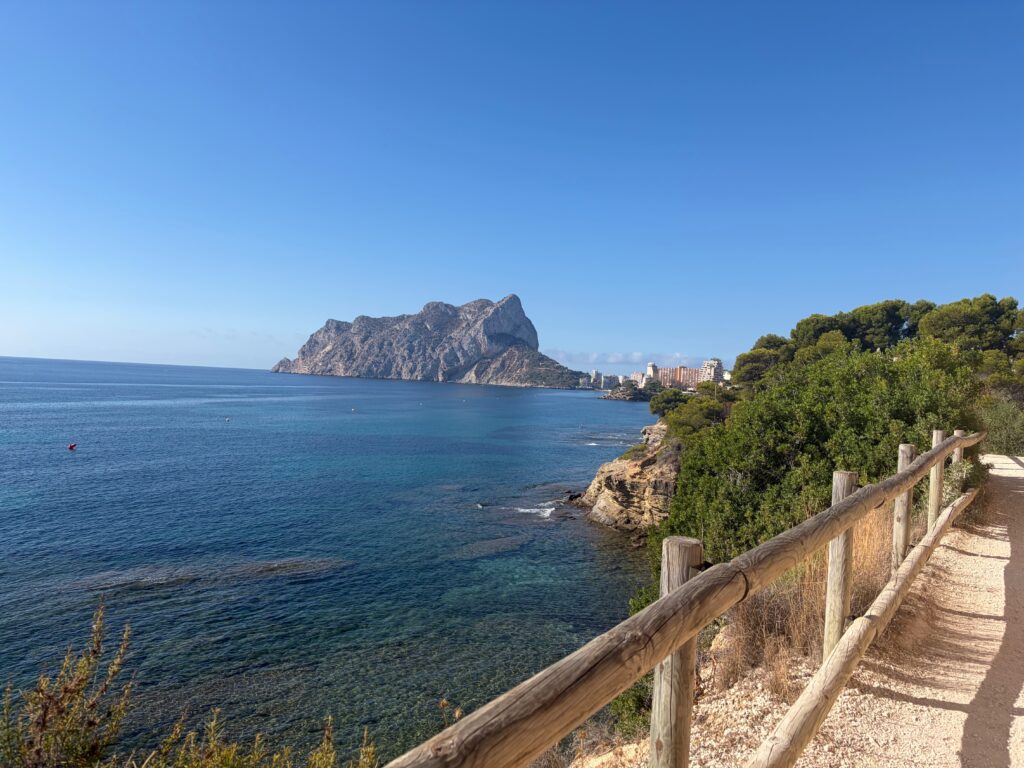
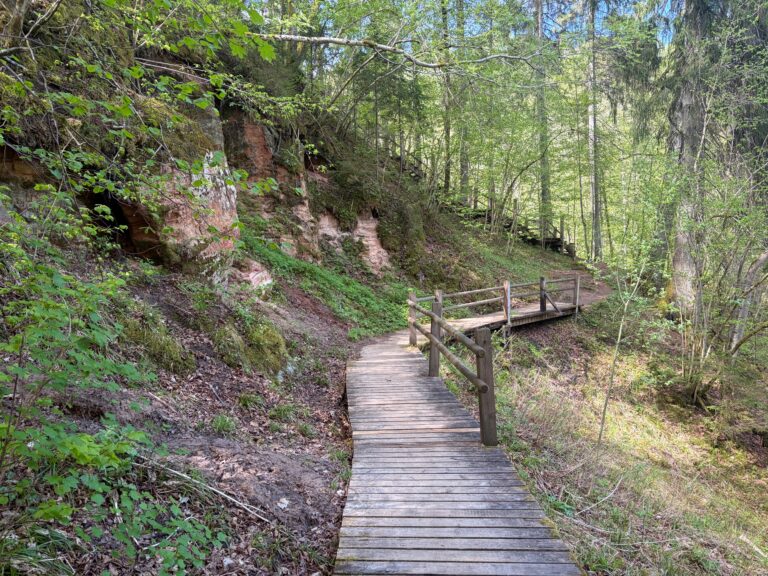
Around Les Bassetes, the path becomes a wide gravel track with wooden railings, running between pine trees and the sea. Look back here: the view of Peñón de Ifach rising above Calp is one of the best of the whole walk.
Stone steps down to Cala de la Fustera

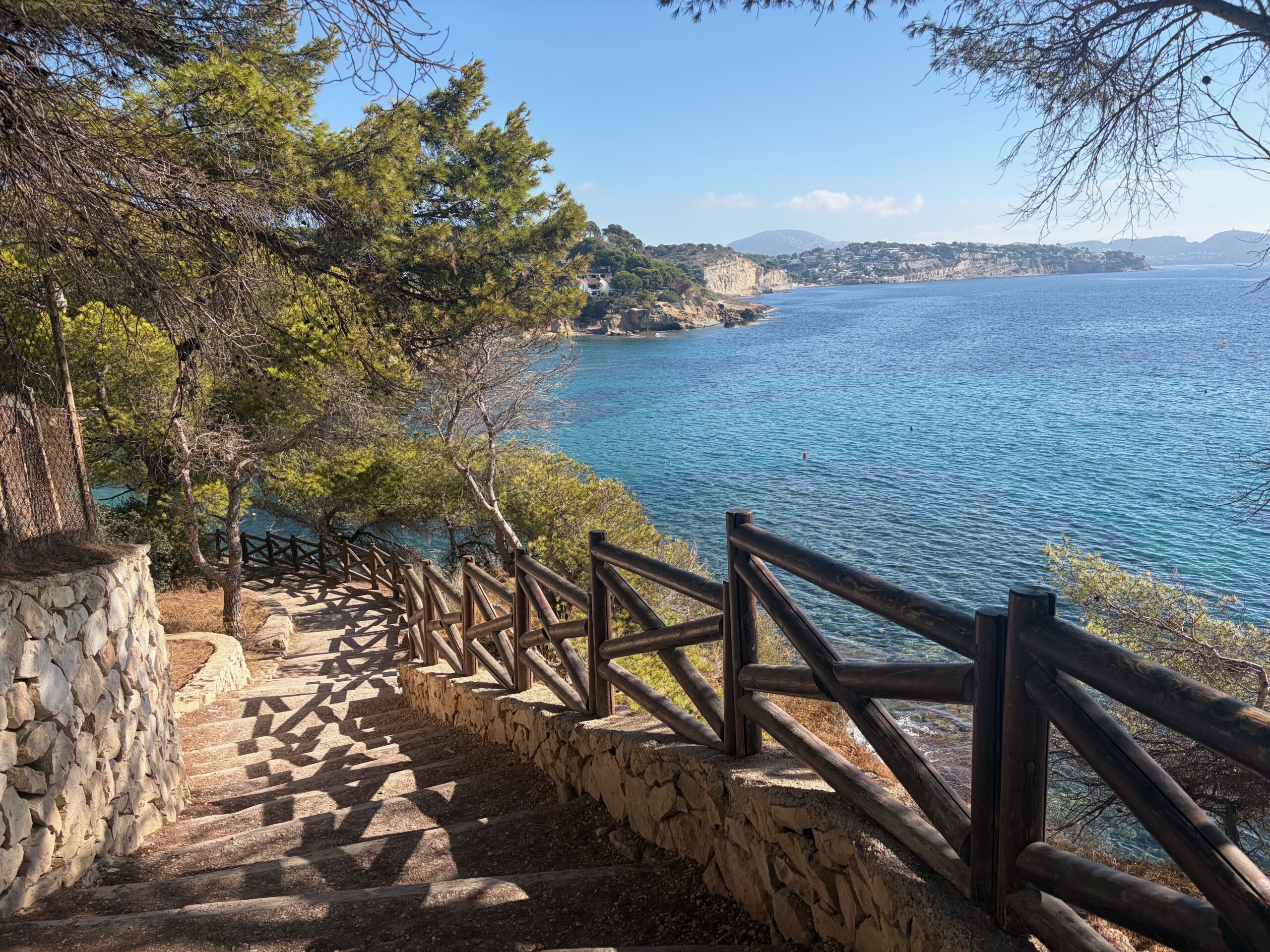
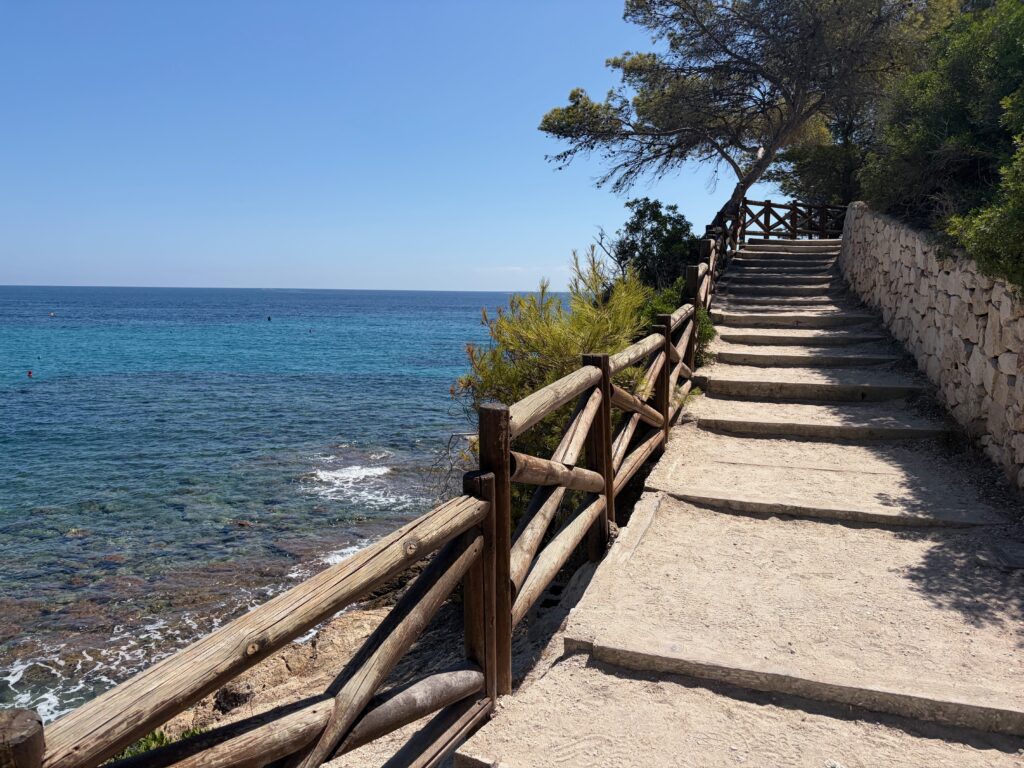
Next comes the most photogenic part of the route: long flights of stone steps with wooden railings, dry-stone walls and pine trees, leading down to Cala de la Fustera. The water below is incredibly clear, turquoise near the shore and deep blue further out.
Along the path, not far from La Fustera, there’s also a tourist information point, where you can pick up brochures with the best snorkelling spots and walking routes along this coast.
Past Cala dels Pinets to Cala de la Llobella

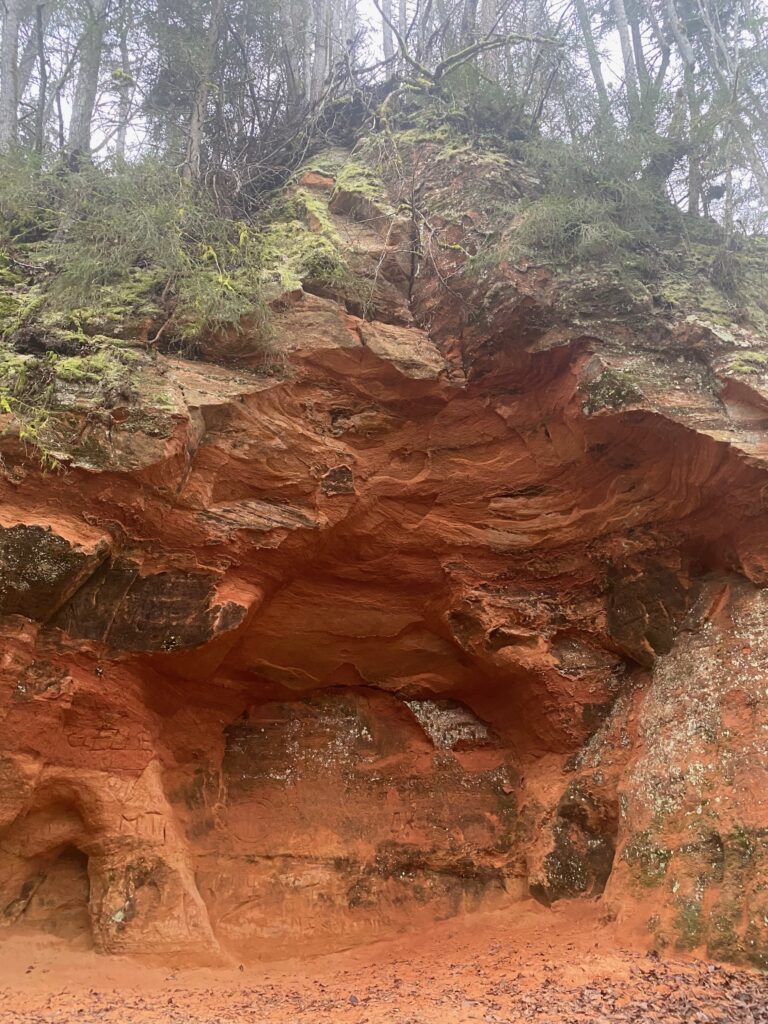
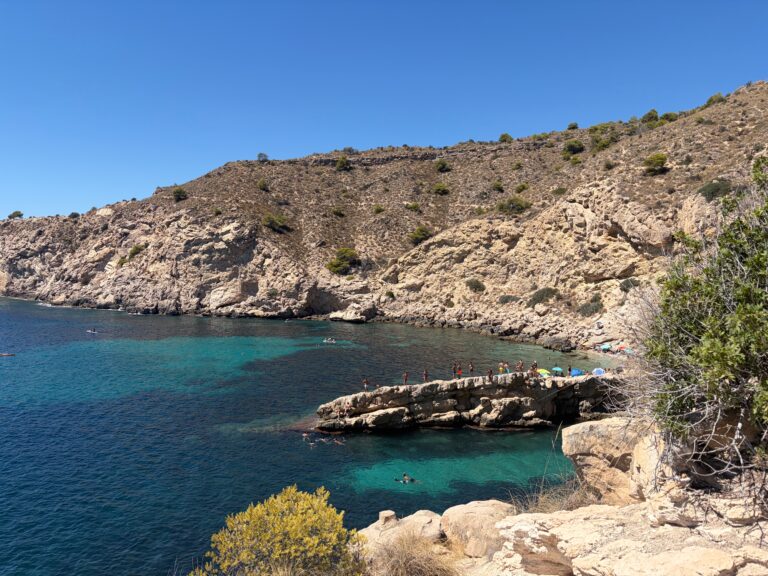
After La Fustera, the path continues along the cliffs past Cala dels Pinets to Cala de la Llobella. This was our turnaround point: a quiet pebble cove below tall, layered sandstone cliffs, with clear turquoise water and a view back along the coast. Don’t walk along the foot of the cliffs, though: it isn’t part of the path and it’s dangerous, as rocks can fall from above.
Back to La Fustera
From Cala de la Llobella we walked back to Cala de la Fustera along the same path. Going in the other direction, you get different views, and the steps that were easy on the way down now go up, so take your time. La Fustera is a good place to finish: there’s a bus stop nearby, so you don’t need to walk all the way back.
Swimming and Snorkelling
One of the best things about this walk is how many places there are to stop for a swim. These were our favourites:
- Cala de la Fustera is the sandiest beach on this stretch. If you mainly want to swim, this is the best choice.
- Cala dels Pinets is another interesting cove, a little wilder and surrounded by rocks.
- Cala de la Llobella is an interesting beach where you can also snorkel.
Bring a mask: the water along this coast is very clear, and you can see the seagrass and rocks below the surface. For more ideas, ask at the tourist information point near La Fustera: they have brochures with the best snorkelling spots on this coast.
Extending the Walk
We only walked one section of the Passeig Ecològic, but you can easily make the walk longer, and there are plenty more interesting places further along the coast. From Cala de la Llobella, the path continues to Cala de l’Advocat, where there is a beach bar and a car park, and then on to the green area at Fanadix with picnic spots. The path can be walked in either direction, so you can choose the section that suits you best.
Combine It with Calp Old Town

After the walk we took the L3 bus from La Fustera back to Calp and wandered around its old town, with narrow streets, mosaic pavements and the famous staircase painted in the colours of the Spanish flag.
The Tram Ride Back
We took the TRAM line 9 back to Benidorm, and the ride itself was a highlight: the line runs high above the coast, past Peñón de Ifach, through the Mascarat gorge and above the marinas near Altea. Sit on the sea side of the tram for the best views.

Highlights
- Marked coastal path with beautiful sea views almost all the way
- Stone steps and wooden railings above incredibly clear water
- Views of Peñón de Ifach from the path
- Lots of small beaches for swimming and snorkelling: La Fustera, Pinets and Llobella
- Layered sandstone cliffs at Cala de la Llobella
- Easy to combine with Calp old town and a scenic tram ride
When to Visit
The walk is good all year round. In spring and autumn the temperature is ideal for walking. In summer it gets hot. We walked it at the end of August, starting around 10 am, and it was a hot day. About half of the path is open and the other half is shaded by pine trees, so it’s manageable, but start in the morning and take breaks in the shade or in the water.
What to Bring
- Water and sun protection: hat, sunglasses and sunscreen
- Comfortable walking shoes; there are many steps and some uneven sections
- Swimwear and a towel if you’d like to swim in one of the coves
- A snorkelling mask: the water here is very clear
- Poles are optional. We didn’t take ours this time, but the path is also well suited to Nordic walking poles if you like using them.
Tips
- Start early in summer. About half of the path has no shade, and it gets hot quickly. The path is also quieter in the morning.
- Walk one section if you’re short on time. The path is easy to split, and the coves make natural turnaround points.
- Pick your beach. For an easy swim, choose the sandy Cala de la Fustera; for snorkelling, try Cala de la Llobella.
- Plan around the bus. Buses along the coast are infrequent, so check the times before you start and finish near a stop, like we did at La Fustera.
- Combine it with Calp. The old town and the tram ride back make it a full day out.
- Respect private property. The path runs below residential houses, so keep to the marked route.
- Keep away from the cliff base. At Cala de la Llobella, don’t walk along the rocky shore below the cliffs — there’s a risk of falling rocks.
Final Thoughts
We really enjoyed the Passeig Ecològic de Benissa. It’s not a long walk, but there are beautiful views at almost every turn, and so many beaches along the way that everyone can find their own favourite spot for a swim or a bit of snorkelling.
It shows a quieter, greener side of the Costa Blanca than the big beach towns. If you’re based in Benidorm, it makes a lovely day trip together with Calp old town and the scenic tram ride.
Looking for more walks near Benidorm? Check out my Racó del Conill Walk: Snorkelling Cove near Benidorm guide.