Red Cliffs (Sarkanās Klintis) near Cēsis – Trail Guide
The Red Cliffs are one of those places I didn’t expect much from — a 2 km trail sounded almost too short to bother with. But the cliffs themselves are genuinely striking, the Rūcamavots spring is one of the most charming natural spots I’ve come across near Cēsis, and the open-air art exhibition in the forest adds something completely unexpected to the walk.
It’s a short trail, but it’s worth stopping for.
Quick Facts
- Location: 57.3219, 25.2223
- Distance: 2 km
- Elevation gain: ~20 m
- Time needed: ~1 hour
- Difficulty (1–5): 1
- Trail type: Circular loop. Forest trail with some wet sections where spring water crosses the path, plus wooden boardwalks.
- Parking: Free parking at the trailhead
- Public transport: Not available — a car is required
- Entrance fee: Free
- Best season: Year-round
- Dog friendly: Yes (on a leash)
- Family friendly: Yes, but not suitable for strollers
Parking & How to Get There
The Red Cliffs are just outside Cēsis, along the P14 Umurga–Cēsis road on the right bank of the Gauja River valley — on the right side when driving from Cēsis. There’s a small free car park right at the trailhead.
GPS: 57.3219, 25.2223
A dry toilet is available near the parking lot, but there are no other facilities on-site.
Hiking the Trail
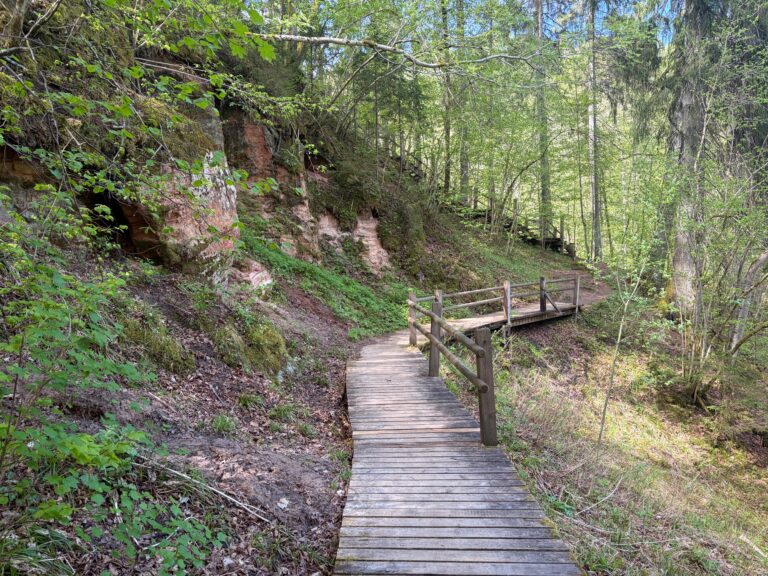
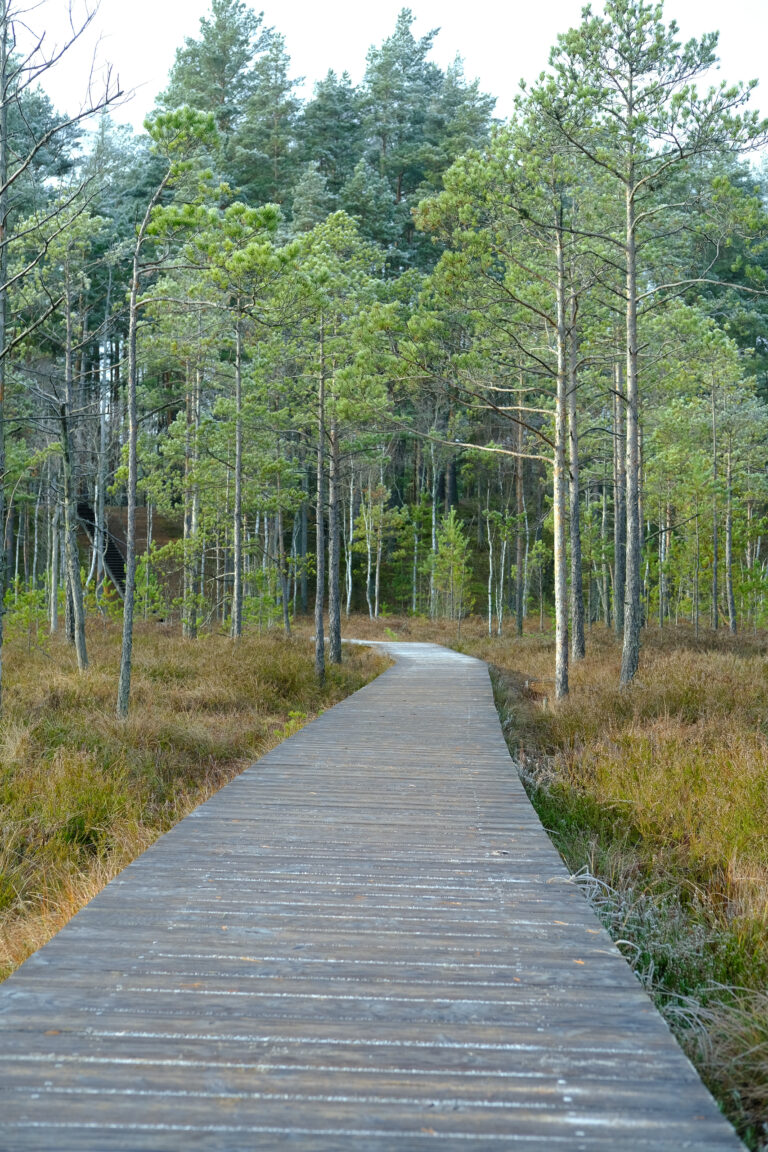
The trail is a short loop starting from the parking area. It follows the base of the cliff face before looping back through the forest. The path is easy throughout — mostly flat, with a few wooden boardwalks over the wetter sections where spring water crosses the track.
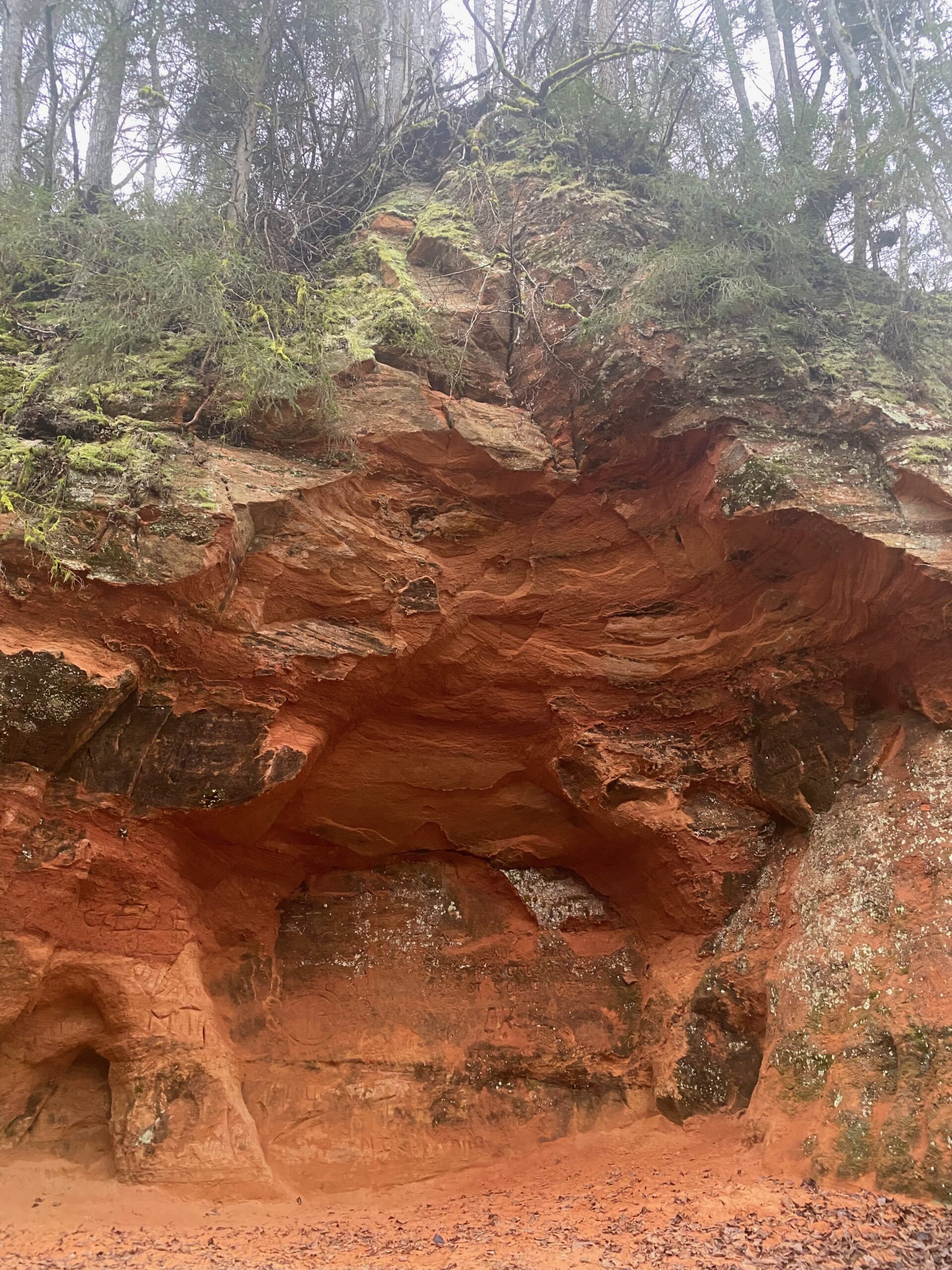
What surprised me most was how quickly the character of the walk changes. You start in fairly ordinary forest, then the cliff wall appears — red sandstone rising up to 10 metres, streaked with different shades and pockmarked with small caves and erosion niches. It’s not what you expect from a trail this short.
Highlights
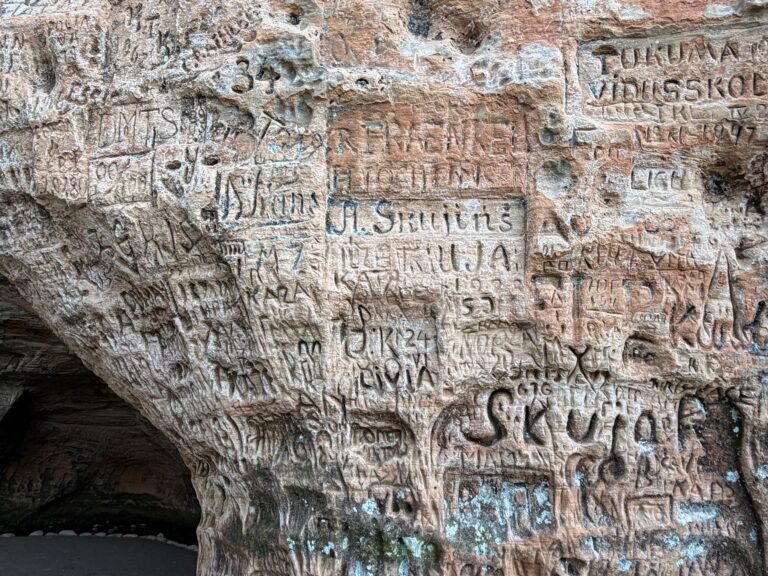
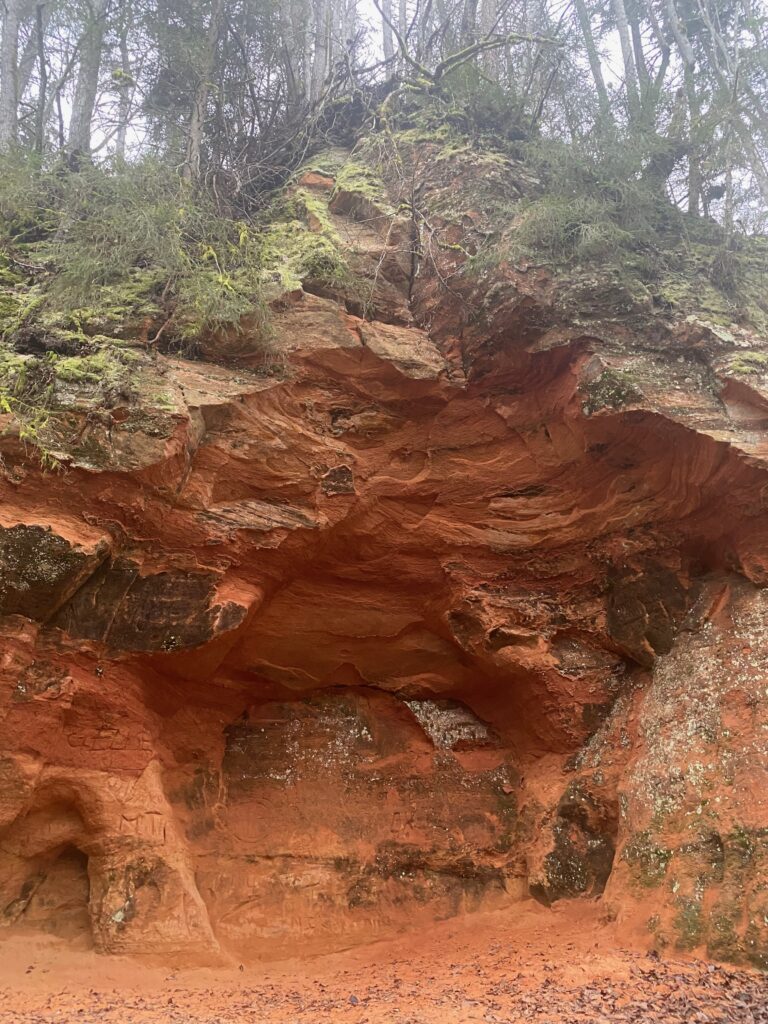
The Red Cliffs: The cliff face stretches for around 200 metres along the forest. The colour is the first thing you notice — proper terracotta red, which changes shade depending on the light and whether the stone is wet or dry. Up close, the surface is full of detail: small hollows, cracks, niches carved by water over a very long time. It’s worth slowing down and actually looking at the rock rather than just walking past it.
There are also inscriptions carved into the sandstone dating back to the 16th century — easy to miss if you’re not looking for them.
Rūcamavots Spring: This is the highlight of the trail for me. The spring emerges directly from the cliff face with a faint rumbling sound — which is exactly where the name comes from (rūcamavots roughly translates as “the roaring spring”). A small wooden platform has been built here so you can get close to it.
Locals come here specifically to collect the spring water for drinking, and there’s usually someone filling bottles when you visit. It has that quality of a place people genuinely use, not just visit — which makes it feel more real than a lot of marked “nature highlights.”
Open-Air Art Exhibition: Along the trail there are large-scale paintings displayed directly in the forest — works by local Cēsis painters, inspired by the fairy tales of Latvian writer Kārlis Skalbe.
The Route Sections
Forest to the Cliff: From the parking area, the trail leads quickly through forest before reaching the cliff base. It takes just a few minutes, but the moment the sandstone wall comes into view is a proper “oh, that’s what all the fuss is about” moment.
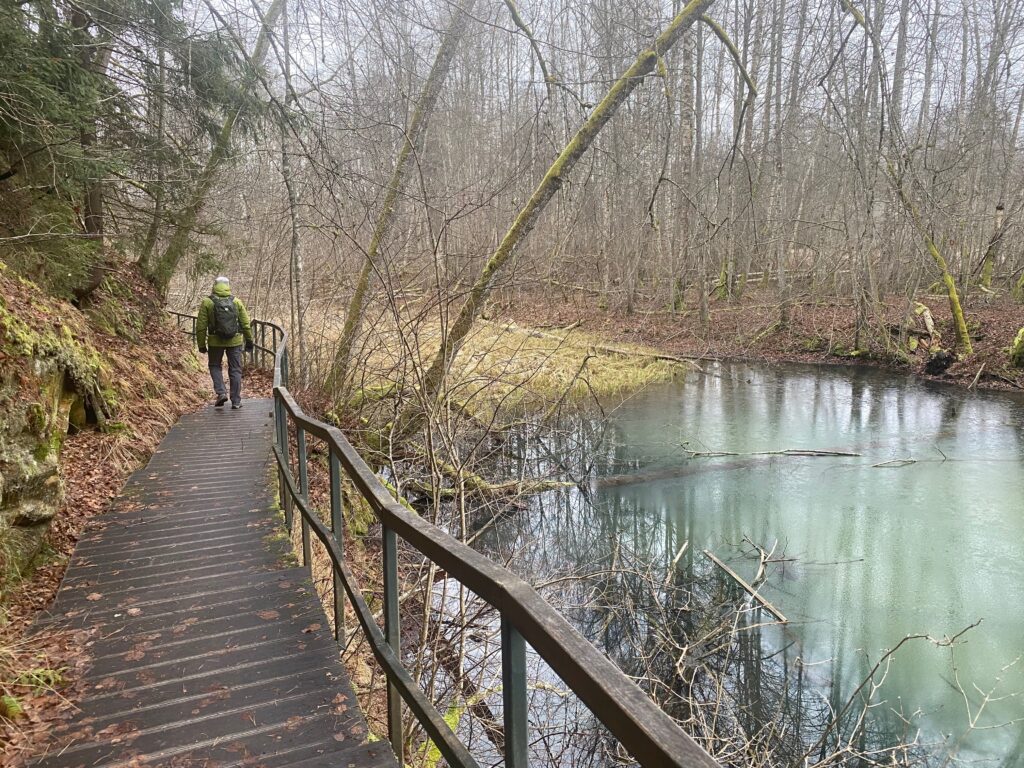
Along the Cliff Base: The main part of the trail follows the foot of the cliff. The Rūcamavots spring is along this section, as are most of the art exhibition pieces. This is the part worth taking slowly.
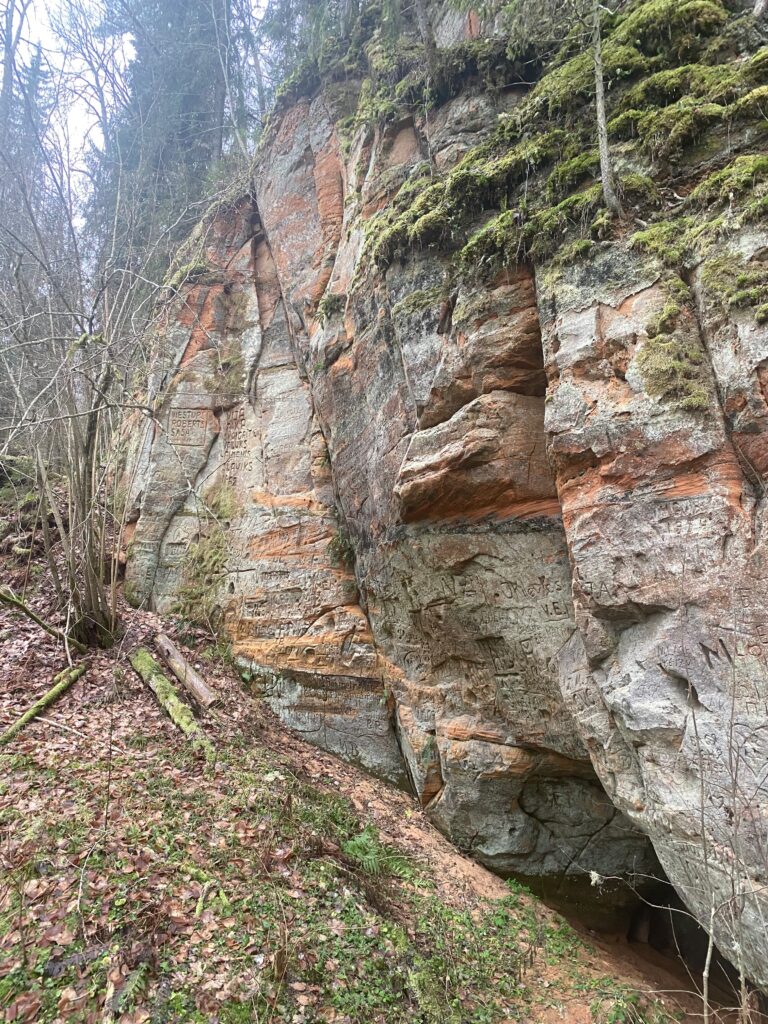
Return Loop: The trail loops back through the forest to the car park. Quieter and more shaded — a good place to let the walk settle before driving on.
When to Visit
- Avoid Crowds: This trail is quiet most of the time. I’ve never found it busy.
- Best Time: Autumn is particularly good — the red sandstone against golden leaves makes the colours almost unreasonably good. Spring is also worth it for the green contrast against the rock.
- Conditions: The forest sections can be muddy after rain. The boardwalks get slippery when wet. In winter, ice can form around the springs, which is beautiful but means extra care underfoot.
What to Bring
- A water bottle: If you want to collect spring water from Rūcamavots, bring a container. It’s worth it.
- Waterproof shoes: Especially in spring and autumn — the sections where spring water crosses the path stay wet even in dry weather.
- Insect repellent: In summer, the damp forest near the springs is classic mosquito territory.
- Camera: The cliff face looks best in morning light or on overcast days when the colour is saturated. Bright midday sun washes it out a bit.
Is the Red Cliffs Worth It?
Absolutely.
It’s short, but it doesn’t feel like a compromise. The cliffs are genuinely interesting, the spring is memorable, and the art exhibition is the kind of unexpected addition that makes a walk feel like more than just a walk.
For experienced hikers, 2 km will feel very short — but the Red Cliffs work well combined with the nearby Cīrulīši Nature Trails, which offer routes of 2.7 km, 3.5 km, and 6.2 km through the Gauja valley with more sandstone formations, caves, and a clear spring of their own. Together they make a solid half-day in the national park.