Szczyrk, Poland: Complete Guide — Where to Hike, Ride the Lifts, and Spend Several Days in the Silesian Beskids
Introduction
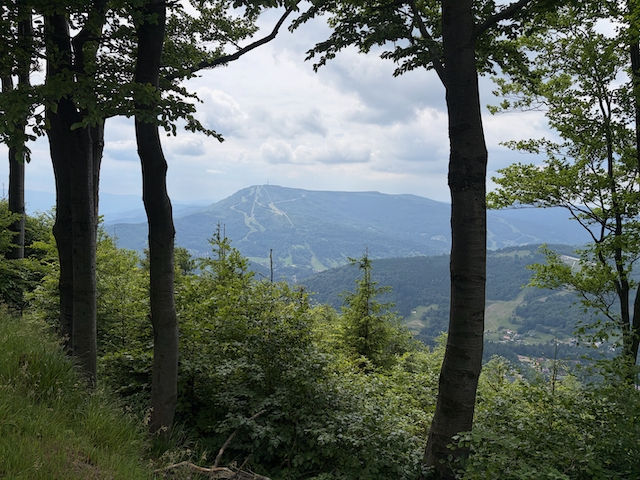
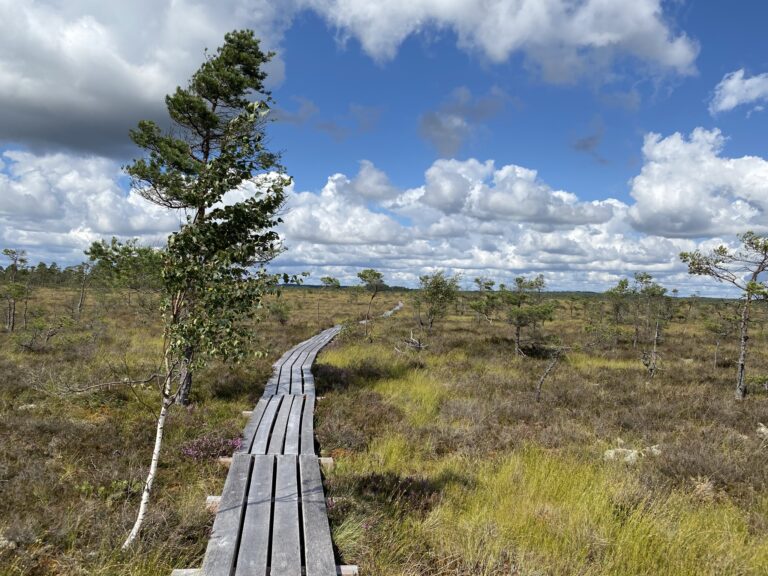
Szczyrk is one of those places that quietly proves the Beskids don’t need to compete with the Tatras to be worth a trip. Just south of Bielsko-Biała, this small mountain city sits at the foot of Skrzyczne, the highest peak of the Silesian Beskids — and while Zakopane pulls in the crowds chasing the jagged, dramatic peaks of the High Tatras, Szczyrk offers something calmer: rounded, green, forested mountains that feel more like gentle giants than obstacles to conquer.
That gentler landscape, combined with a genuinely excellent network of cable cars and chairlifts, makes Szczyrk one of the most accessible mountain destinations in Poland. The lifts do much of the climbing for you, opening up ridge walks and summit views to hikers who’d rather spend their energy enjoying the scenery than grinding uphill — which also makes it a rewarding base for families, beginners, or anyone easing back into hiking after a break.
It’s a city built for all seasons. In winter, Szczyrk is one of Poland’s more popular ski resorts, with the same lifts that carry hikers in summer switching over to serve the slopes. In the warmer months, those same lifts — plus a handful of spa and wellness facilities in town — mean there’s plenty to do even on a day when you’d rather not hike at all.
This guide pulls together everything we learned from several days based in Szczyrk: three very different hikes ranging from an easy, lift-assisted loop to the demanding climb up Babia Góra, plus practical notes on getting around, where to stay, and how to string it all together into a multi-day trip.
Getting There & Getting Around
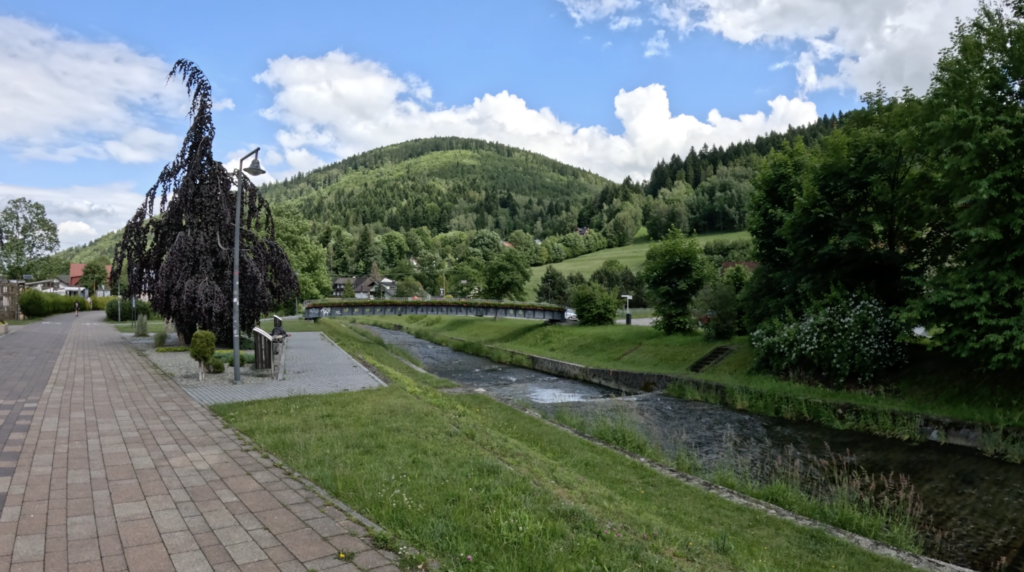
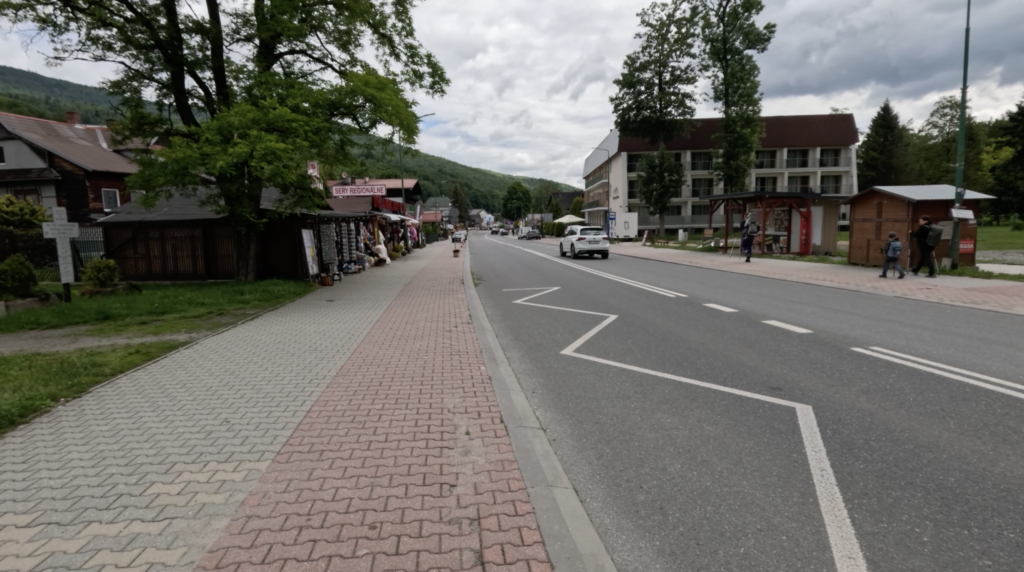
The easiest way to reach Szczyrk is by car. Once you’re there, though, a car stops being essential for most of what this guide covers — plenty of places around town are reachable on foot or by public transport, and the same goes for two of the three hikes in this guide. The one exception is Babia Góra: to reach the trailhead at Przełęcz Krowiarki, you’ll need your own transport.
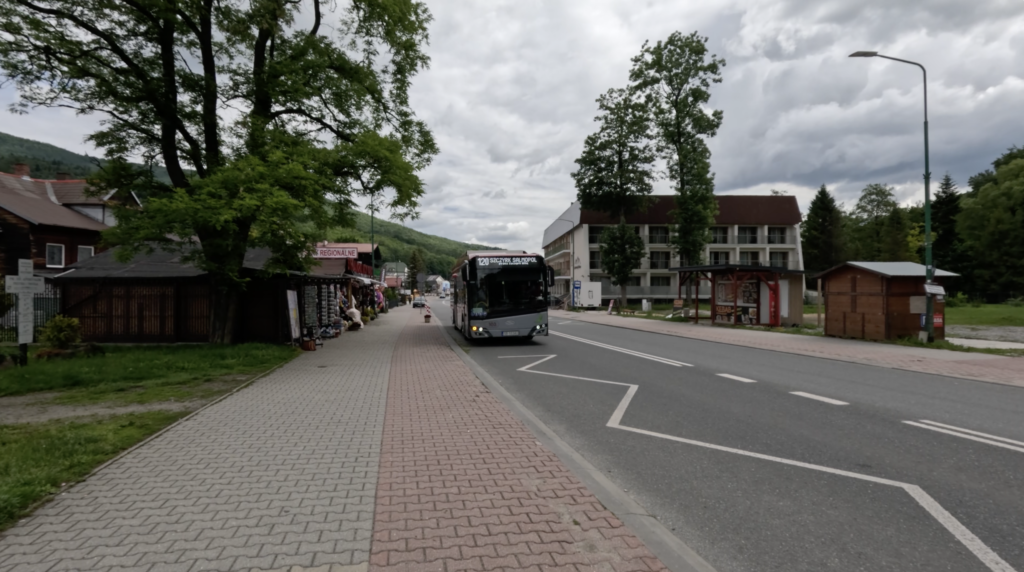
Locally, the number 120 bus is the workhorse of getting around. It runs through Szczyrk itself and also connects onward to the neighbouring town of Bielsko-Biała, which makes it genuinely useful for stitching together a multi-day trip without renting a car for every outing. Tickets can be bought on board with either cash or card, so there’s no need to sort out payment in advance.
You can check the bus 120 timetable here: bus 120 timetable.
Where to Stay & Town Overview
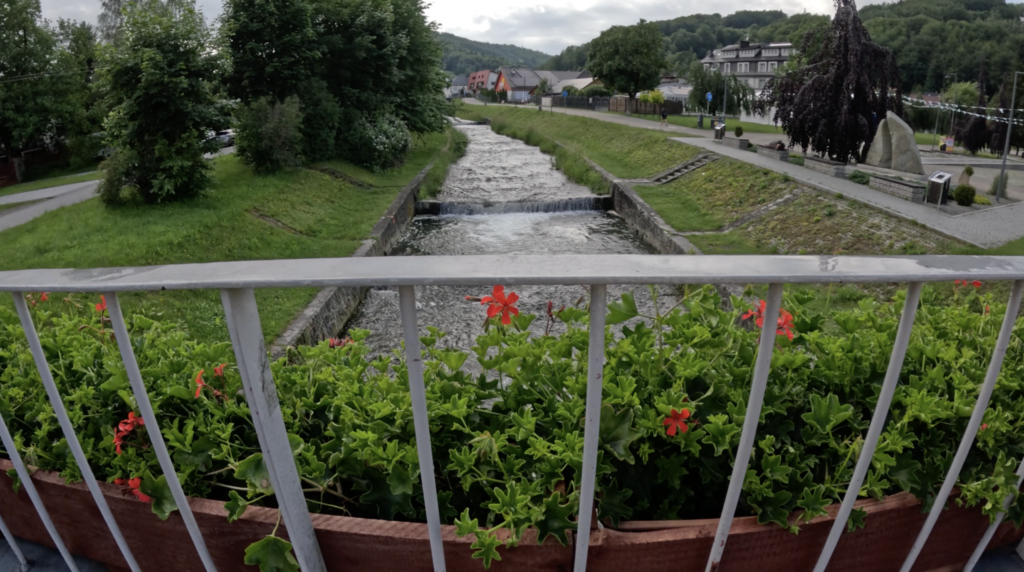
Szczyrk is a small town, built mostly along a single main street. That’s where you’ll find most of cafés and restaurants, and small shops — and where the town’s character really shows itself. Compared to Zakopane, the atmosphere here is noticeably quieter and calmer, which makes simply strolling along the main street its own small pleasure at the end of a hiking day.
Being a mountain town, accommodation location comes with a small catch: the further you stay from the main street, the further (and higher) you’ll need to walk to get back to the centre. It’s worth keeping in mind when choosing where to book, especially after a long day on the trail.
That said, the range of accommodation on offer is genuinely wide, covering pretty much every preference and budget. Fully equipped apartments of various sizes are widely available.
For something more resort-style, there are also several spa hotels in and around town, such as:
- Aries Hotel & SPA Szczyrk — right in the town centre;
- Mercure Szczyrk Resort — further out, and almost a different world in itself.
On the food side, the town’s small size doesn’t stop it from offering a good variety of restaurants and cafés across every budget. One standout worth calling out specifically is Restauracja z Ikrą, a lovely fish restaurant that’s well worth a visit during your stay.
The Three Signature Hikes — Overview & Comparison
Short intro paragraph (~150 words) before the table.
| Route | Distance | Difficulty | Lift-dependent | Family friendly |
| Szczyrk Loop to Malinowska Skała | 7.6 km | 2 / 5 | Yes (4 lifts) | Yes |
| Bielsko-Biała → Szyndzielnia → Klimczok → Szczyrk | 9.04 km | 2 / 5 | Partial (1 cable car) | Older children |
| Babia Góra from Przełęcz Krowiarki | 10.7 km | 4 / 5 | No | Older children only |
Hike Deep-Dives
Szczyrk Loop to Malinowska Skała
This is the easiest of the three hikes, and the one that leans hardest on Szczyrk’s lift network. The route follows the Pętla Szczyrkowska (Szczyrk Loop), using four lifts across two resorts — Szczyrk Mountain Resort and Skrzyczne COS — to do almost all of the climbing for you. A single ticket covers a return ride on all four, and since they can be ridden in any order, the route is easy to adapt to your pace or the weather.
From the top of the second lift, a wide, gently rolling ridge track leads out to Malinowska Skała — a massive, solitary rock that rises out of the ground like a giant mushroom and is one of the best-known symbols of the Silesian Beskids. Benches at the top make it an easy place to sit, take in the panorama, and, on a clear day, pick out Pilsko and Babia Góra in the distance.
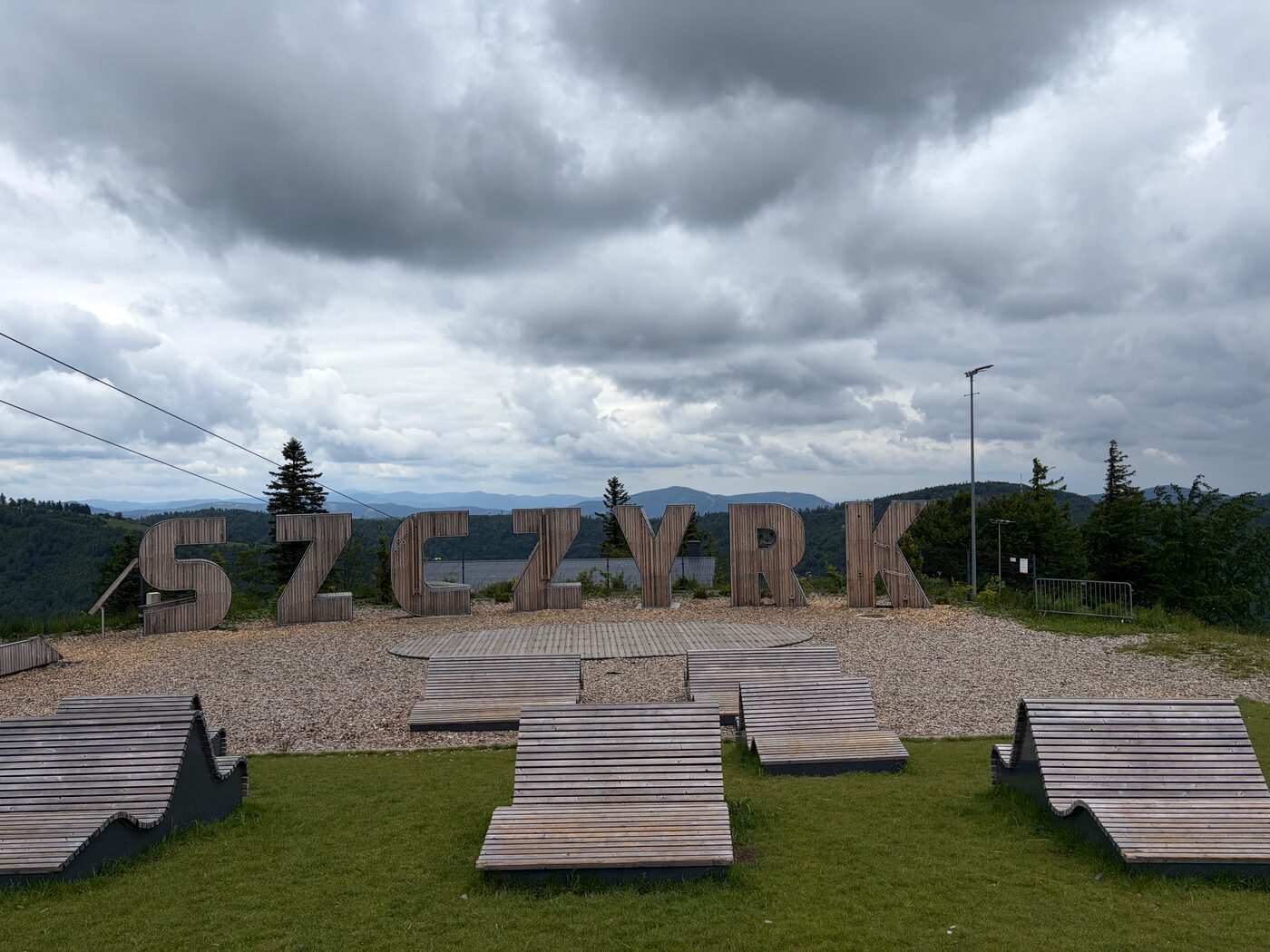
Backtracking along the same ridge brings you to Skrzyczne (1257 m), the highest peak of the Silesian Beskids and part of the Crown of Polish Mountains. There’s a PTTK mountain shelter just below the summit and a viewing platform, both worth a stop before taking the final two lifts back down into the valley. On foot, the walking totals around 7.6 km, with only 180 m of elevation gain — genuinely manageable for families, and short enough to shorten further if you’re hiking with small children.
Because it depends on lift operating hours, it’s worth checking these in advance, and note that the chairlift up to the ridge (B5) is only open to hikers in summer — in winter it serves skiers only.
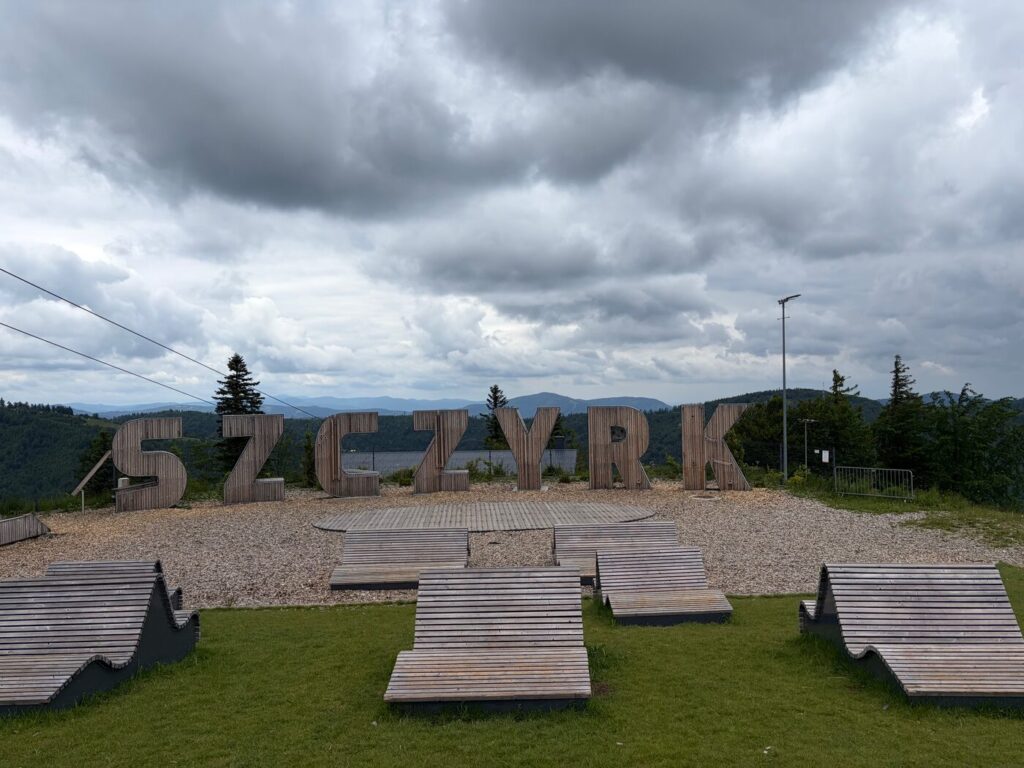
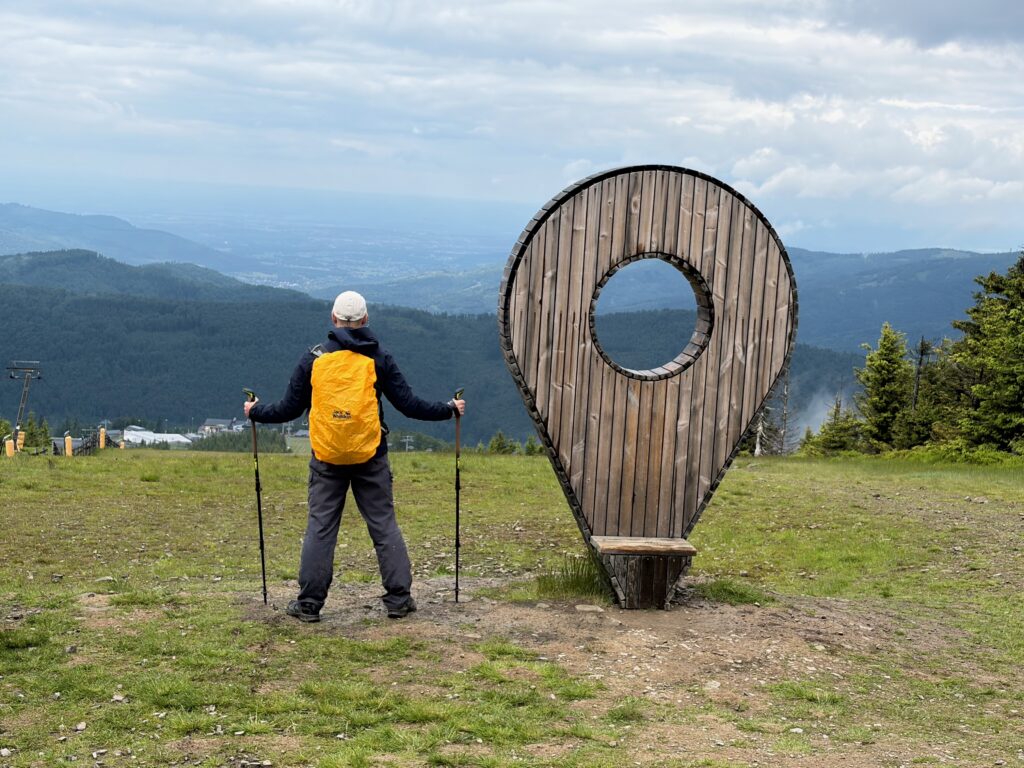
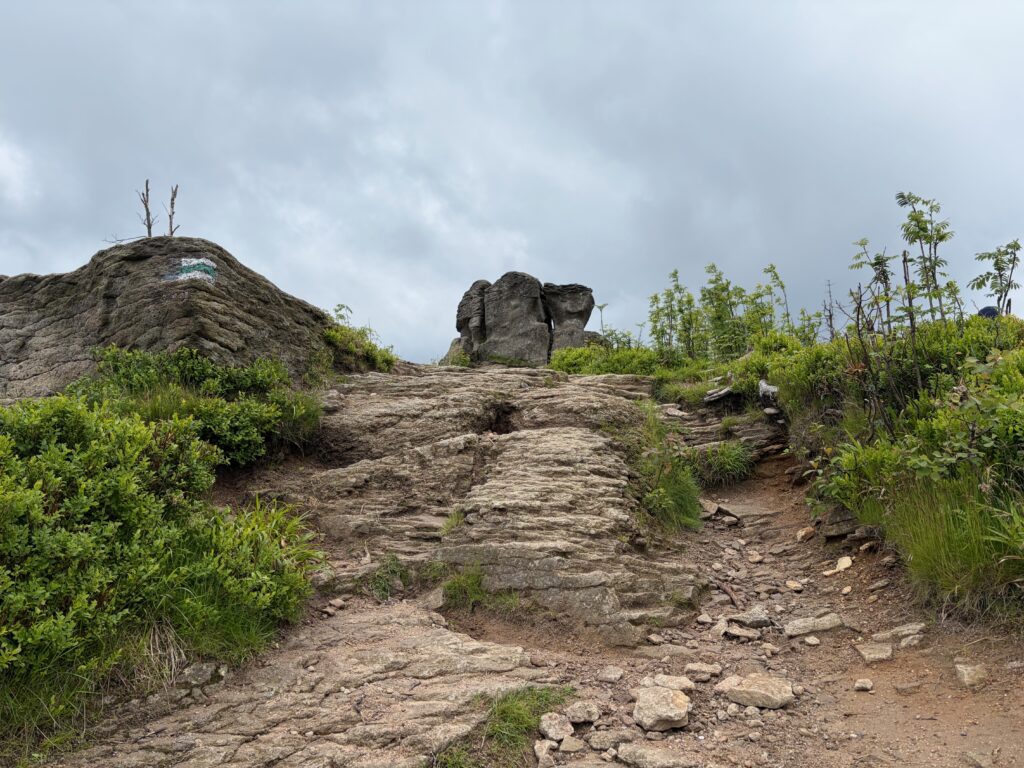
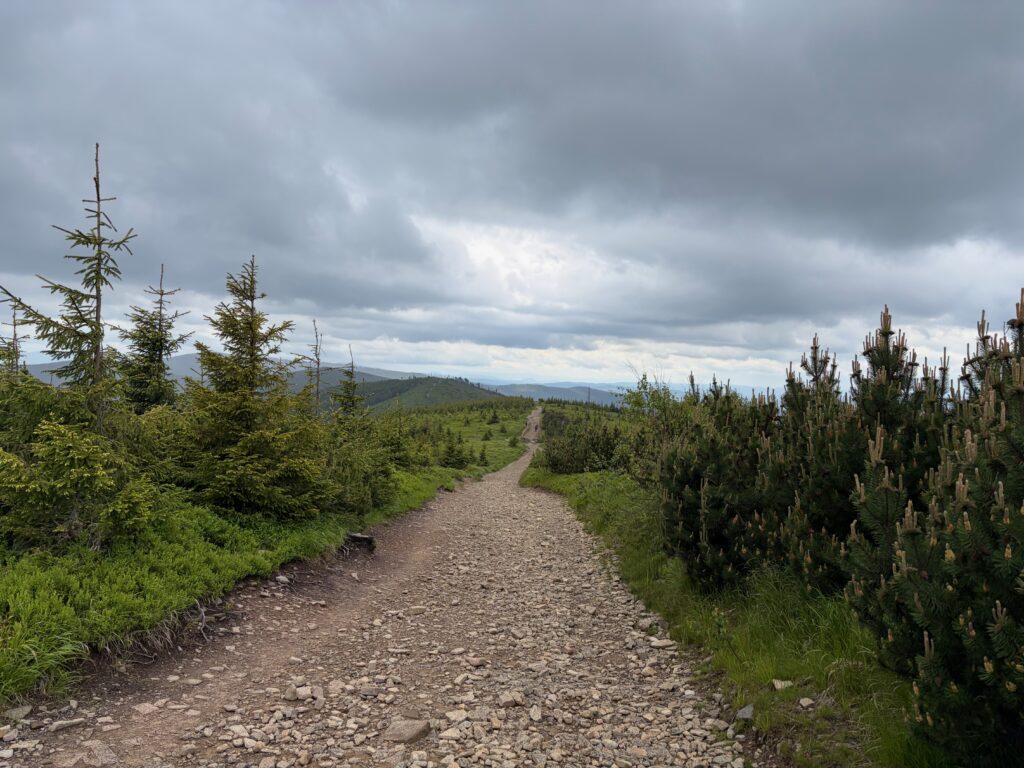
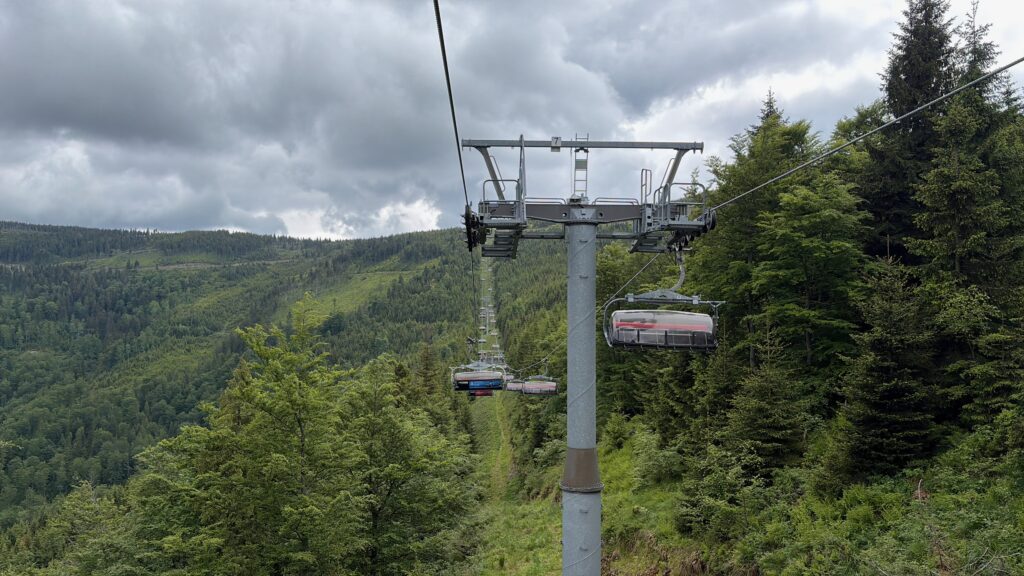
Szczyrk Loop to Malinowska Skała — 4 lifts, an easy ridge walk, and one of the most recognisable rocks in the Silesian Beskids.
Bielsko-Biała → Szyndzielnia → Klimczok → Szczyrk
This point-to-point hike links two of the most popular peaks of the Silesian Beskids, and it works as a natural companion to the Szczyrk Loop — where that route uses lifts to climb, this one uses a single cable car ride to skip most of the ascent, then rewards you with a long, scenic walk back down into Szczyrk.
The day starts with the bus 120 from Szczyrk to Bielsko-Biała, followed by a city bus to the lower station of the Szyndzielnia cable car. The gondola carries you almost to the top of the mountain, leaving just a short walk to Schronisko PTTK Szyndzielnia — the oldest mountain shelter in the Beskids, with a wide view back over Bielsko-Biała.
From there, an easy ridge walk leads to Klimczok (1117 m), the highest point within the city limits of Bielsko-Biała and, for many visitors, the highlight of the day — not just for the views toward Skrzyczne and the Beskid Mały and Żywiecki, but for the relaxed, picnicking atmosphere at the summit. A second shelter, Schronisko PTTK Klimczok, sits just below the top and makes a good coffee stop before the descent.
The way down opens with sweeping views across the valley before gradually steepening, passing the Sanktuarium Matki Bożej Królowej Polski and the Mercure Szczyrk Resort on the final stretch into town. In total it’s about 9 km on foot, mostly downhill (120 m up, 630 m down), which makes it a relaxed, low-effort day once the cable car has done its job — just be ready for a steep, paved finish on the way back into Szczyrk.
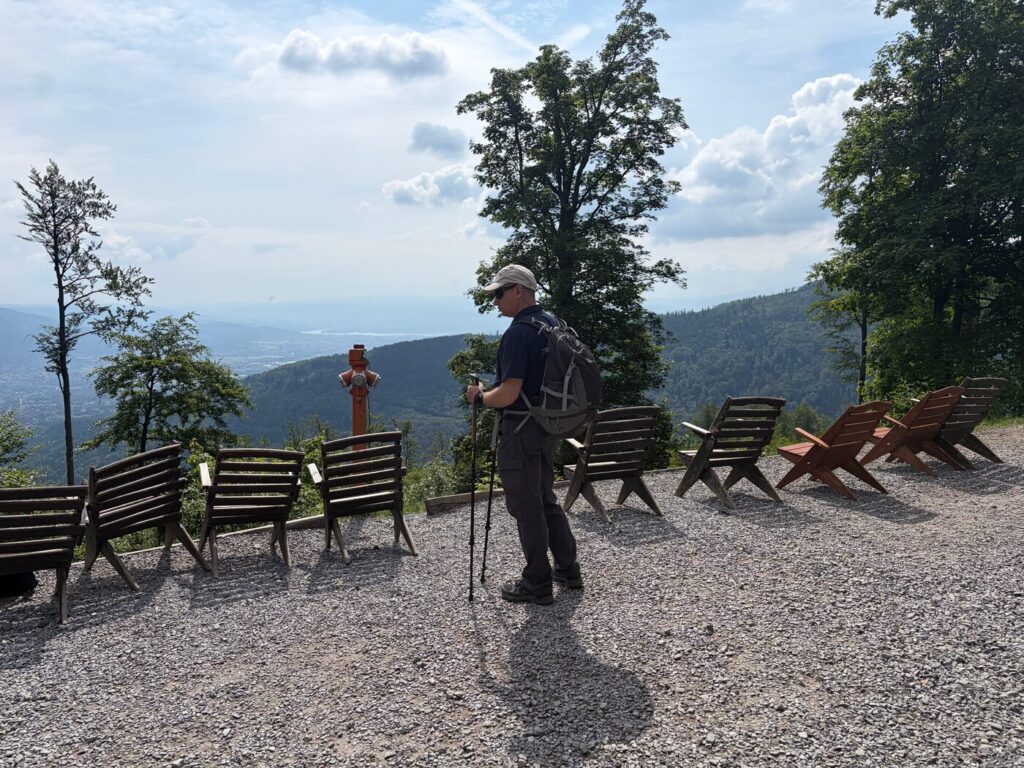
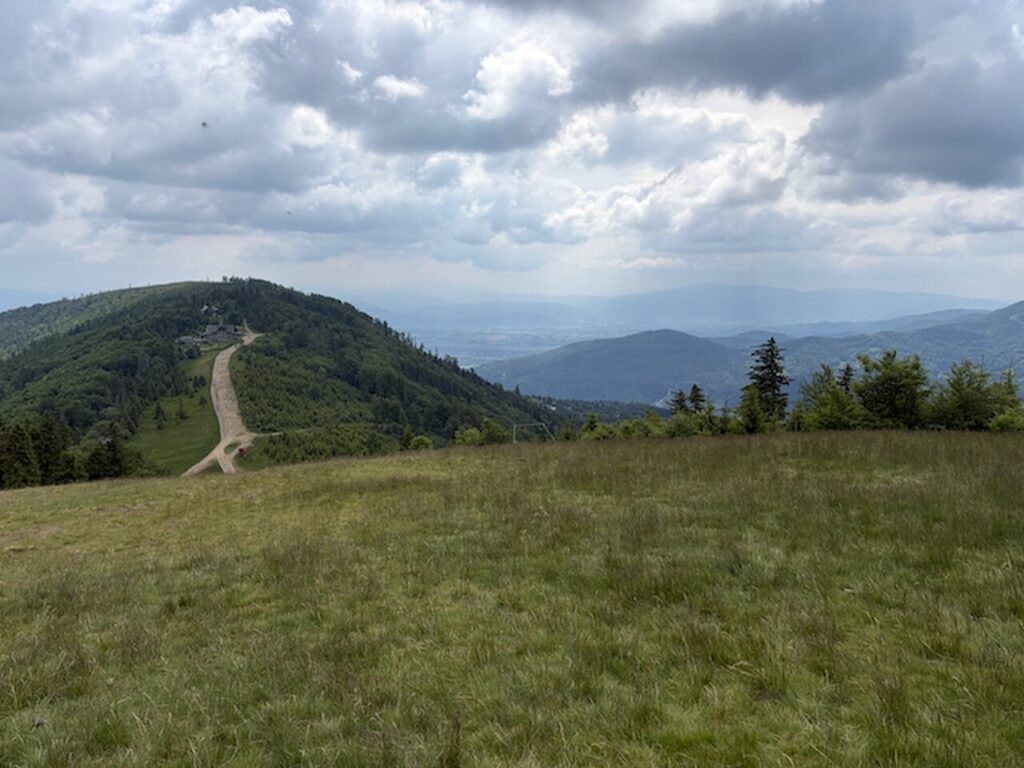
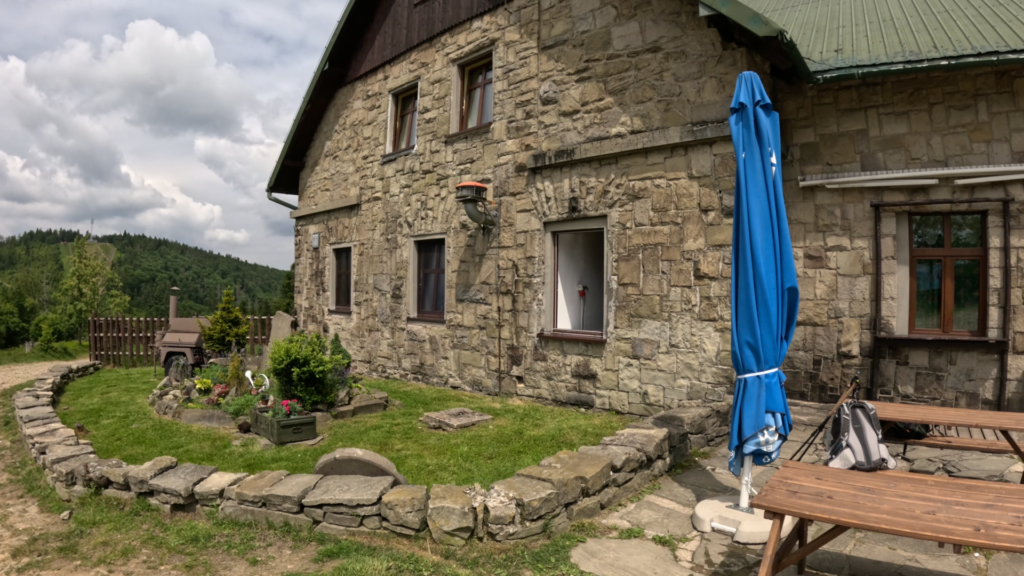
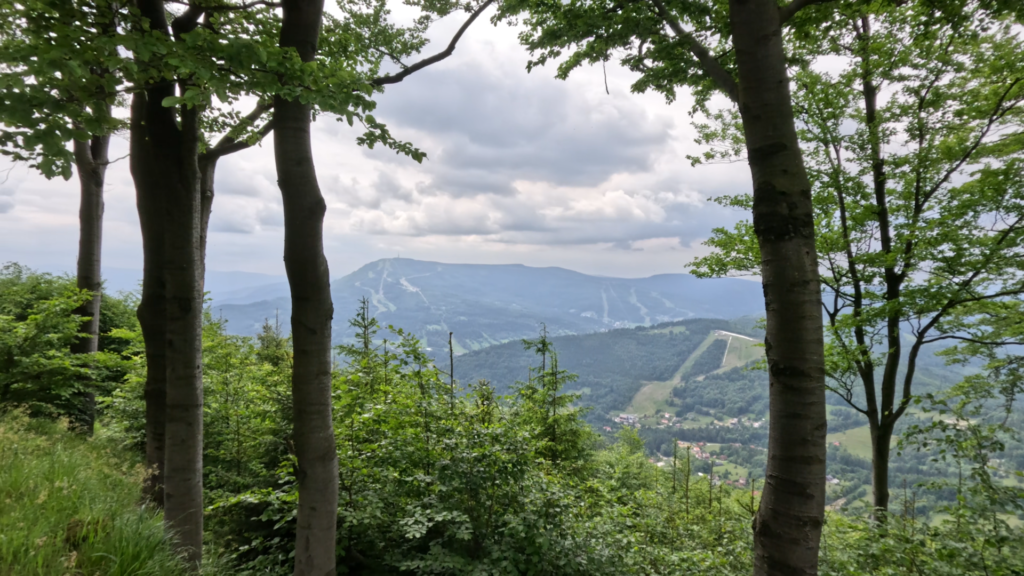
Bielsko-Biała → Szyndzielnia → Klimczok → Szczyrk — one cable car, two mountain shelters, and a long, scenic way down.
Babia Góra from Przełęcz Krowiarki
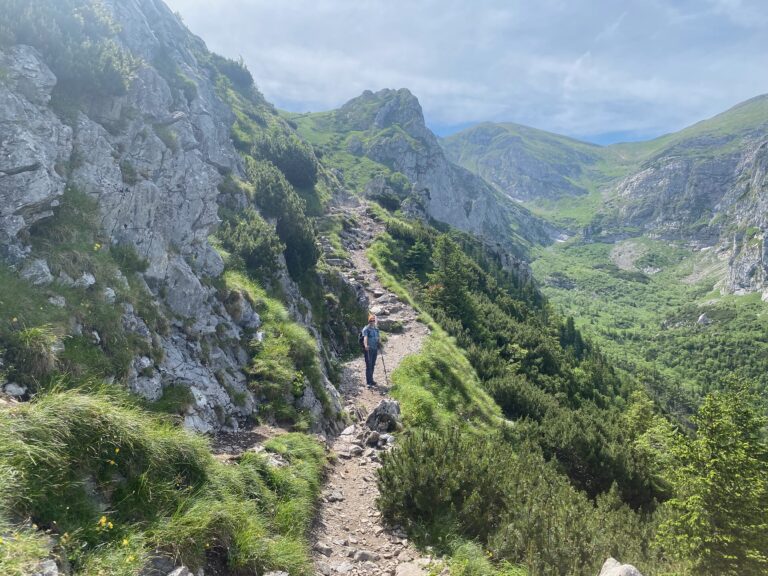
Babia Góra (1725 m) is a different kind of day entirely — the highest peak of the Western Beskids, and the most demanding hike covered in this guide. Unlike the two lift-assisted routes above, there’s no shortcut here: reaching the trailhead at Przełęcz Krowiarki requires your own transport, and every metre of the 680 m ascent has to be walked.
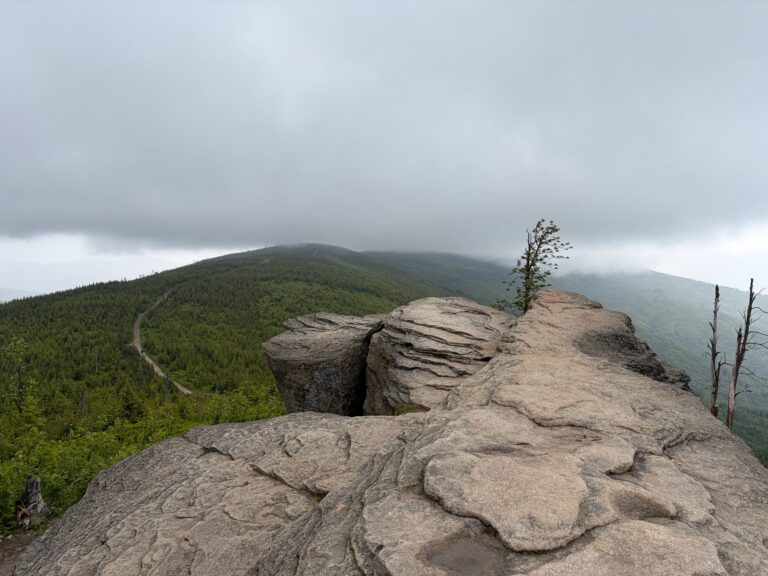
The route follows the red trail from Przełęcz Krowiarki, climbing through forest on a steep, demanding path before breaking out onto an open ridge. Along the way it passes three intermediate viewpoints — Sokolica (~1367 m), Kępa (~1521 m), and the rocky Gówniak / Wołowe Skałki (~1617–1644 m), a boulder-strewn peak often mistaken for the summit itself, especially in fog. From there, the trail crosses two more shallow rises before finally reaching the top through a wide field of boulders.
The summit is unmistakable once you’re there: a stone wall built as wind shelter, an obelisk commemorating Archduke Joseph Habsburg’s ascent, a plaque dedicated to John Paul II, and a stone altar all mark the highest point in the Babia Góra massif — and the highest “non-Tatra” peak in all of Poland. Because the Polish–Slovak border runs along the ridge, it’s worth carrying an ID document.
At 10.7 km round trip and roughly 4.5 hours, this is a full day out, and Babia Góra has earned its nickname as the “Mother of Bad Weather” — conditions on the exposed summit can turn quickly even when the valley below is calm. Dogs aren’t allowed on the Polish side of the park. Given the effort involved and its dependence on clear weather, this is the hike worth scheduling around the forecast during a multi-day stay in Szczyrk.
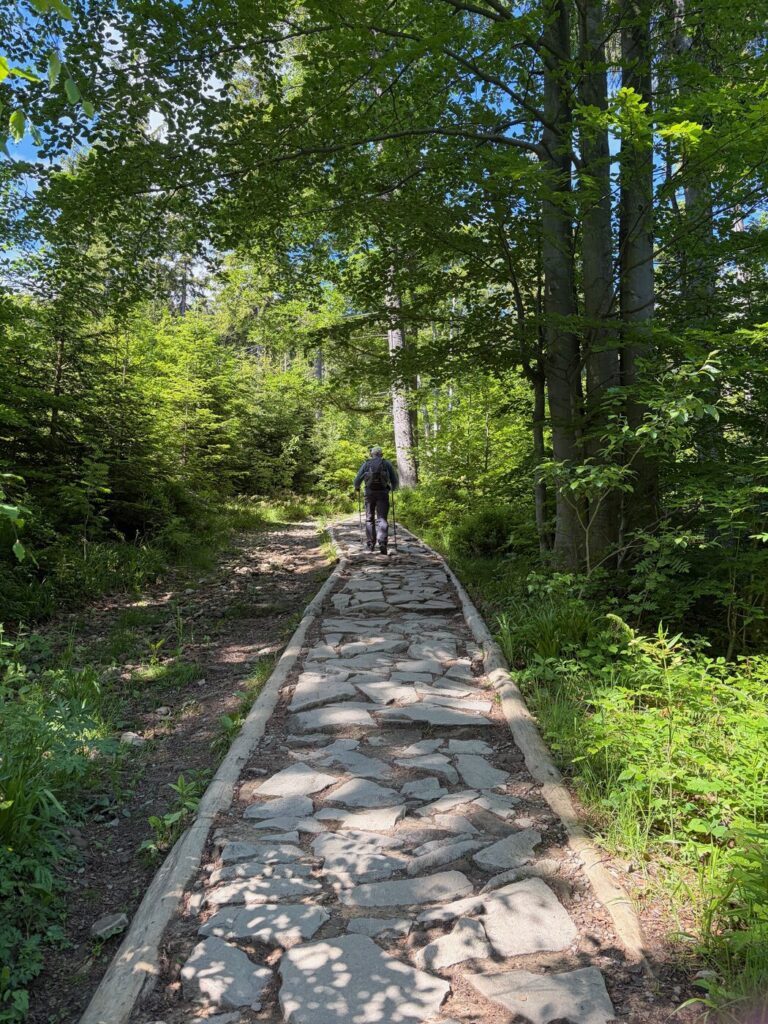
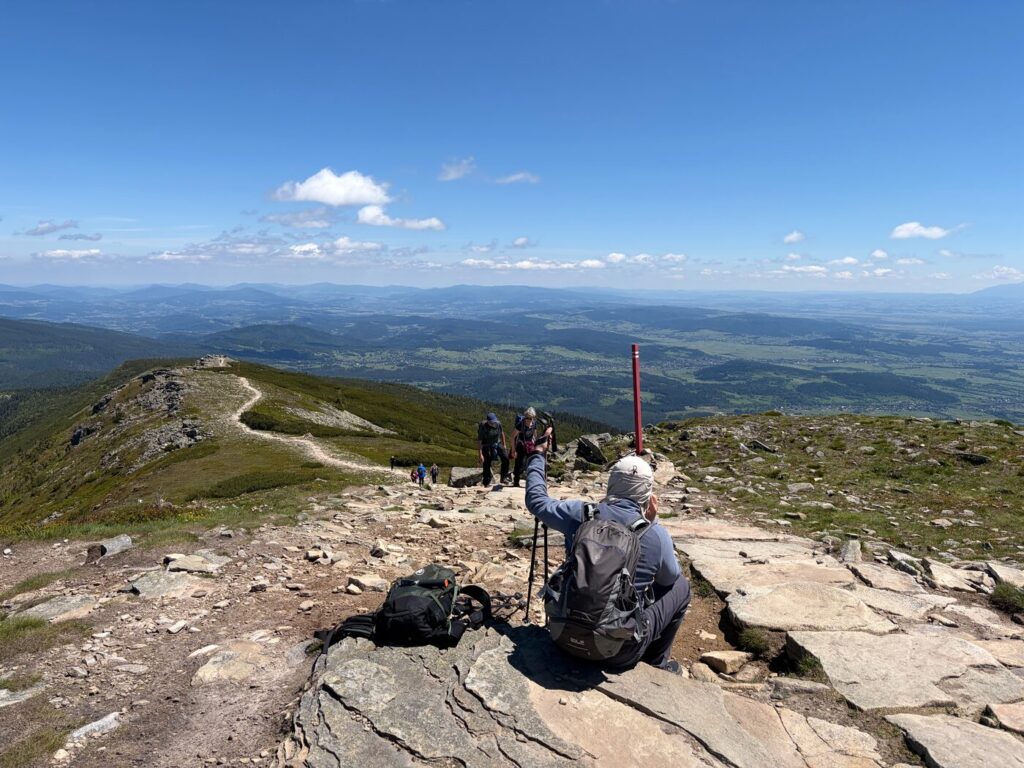
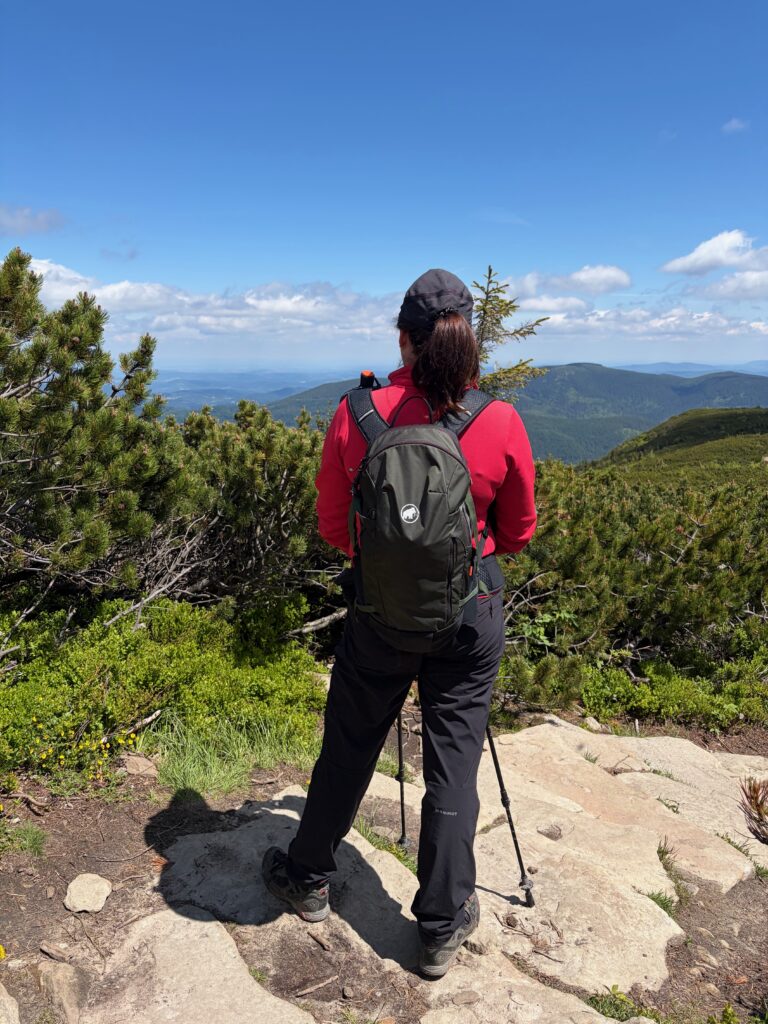
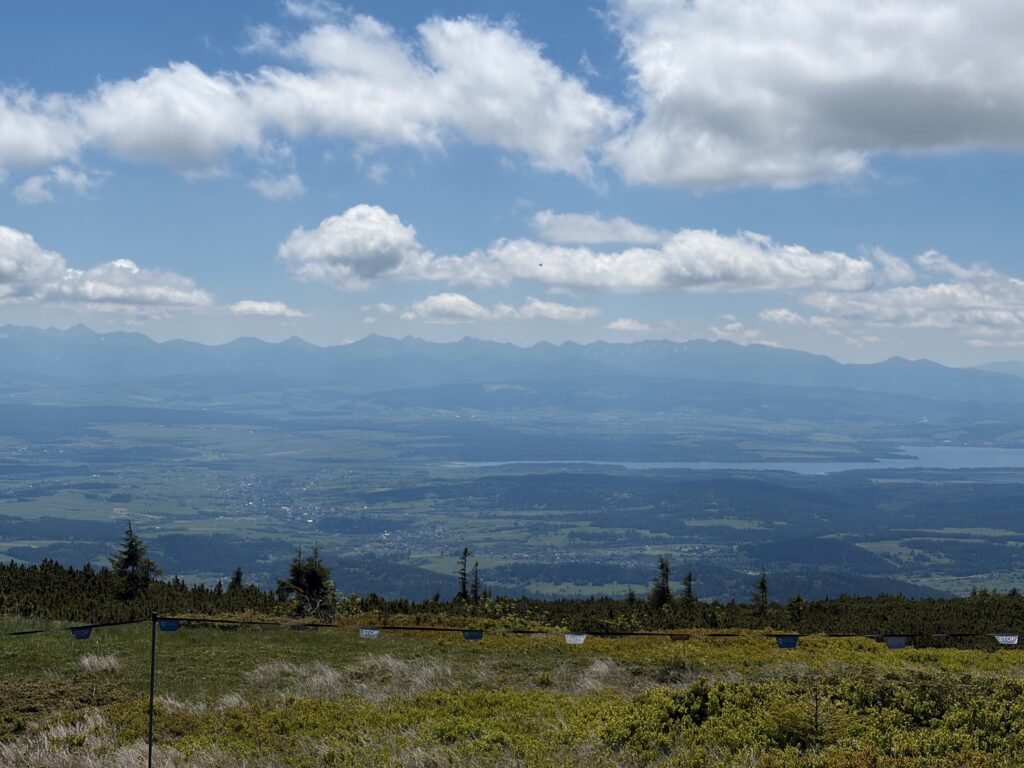
Babia Góra from Przełęcz Krowiarki — the highest, wildest, and toughest of the three routes around Szczyrk.
Suggested Multi-Day Itinerary
With all three hikes covered, here’s how they fit together into a relaxed 4–5 day trip based in Szczyrk: an easy arrival day, the three hikes sequenced from easiest to hardest, and a reserve day at the end to soak up whatever the trip (or the weather) didn’t quite get to.
Day 1: Arrival
Use your first day simply to arrive and settle in. Check into your accommodation, get your bearings on the main street, and take it easy — there’s no need to rush straight into a hike. It’s also a good time to check lift operating hours and the weather forecast for the days ahead, so you can decide where Babia Góra best fits into the rest of the trip.
Day 2: Szczyrk Loop to Malinowska Skała
Start with the easiest of the three hikes. The Szczyrk Loop lets four lifts do most of the climbing, leaving you with an easy ridge walk out to Malinowska Skała and back. It’s a gentle way to get proper mountain views on your first full day, and it doubles as a chance to get comfortable with how the lift system works before relying on it again later in the trip.
Day 3: Bielsko-Biała → Szyndzielnia → Klimczok
Day three is a relaxed, public-transport day. Catch the bus 120 into Bielsko-Biała, ride the Szyndzielnia cable car up, and enjoy the ridge walk over to Klimczok before the long, scenic descent back into Szczyrk. With most of the ascent handled by the cable car, this is a lower-effort day than it looks on paper — a good way to keep the legs fresh ahead of the hardest hike of the trip.
Day 4: Babia Góra
Save Babia Góra for the day with the best forecast, since this is the one hike in the guide that doesn’t forgive bad weather. It needs your own transport to reach the trailhead at Przełęcz Krowiarki, and every metre of ascent is on foot — so treat it as the main event of the trip. If the forecast looks unsettled on your planned day four, it’s worth swapping it with an earlier day and using your reserve day instead.
Day 5: Reserve Day
Keep the last day unstructured. It works well as a straightforward rest day in town — exploring the main street, eating somewhere you didn’t get to yet, or spending an afternoon at one of the spa hotels — but it also doubles as insurance: if the weather didn’t cooperate earlier in the trip, this is the day to fit Babia Góra in instead.
Practical Tips
What to Bring
- Water
- Food / picnic supplies
- Good footwear
- Layers (wind/rain)
- Sun protection
- Trekking poles — personal recommendation
- Cash/card for lift and cable car tickets (cheaper online)
When to Visit
Across all three hikes, the same window keeps coming up as the sweet spot: June through October. July and August are the busiest months, when both the trails and the lift queues fill up with summer holidaymakers, so the shoulder months either side are worth prioritising if you’d rather have the ridge to yourself.
We visited in early June, while Polish schools were still in session — and it turned out to be close to ideal. The trails, the shelters, and the lift stations were all quiet, with hardly anyone else around, which made for a genuinely peaceful few days in the mountains. The one small downside was that not every mountain shelter and tavern along the way was open yet for the season — but honestly, it didn’t get in the way of enjoying the trip at all.
Weather is worth watching closely regardless of when you go, and especially before tackling Babia Góra: conditions on its exposed summit can shift quickly even when it’s calm down in the valley, which is part of why it’s earned its nickname as the “Mother of Bad Weather.” Checking the forecast — and lift operating hours, which can change between seasons — before setting off each day will save you from surprises.
Is Szczyrk Worth a Multi-Day Trip?
For a place this small, Szczyrk covers a surprising amount of ground — quite literally. Within a few days you can ride a lift up to a mushroom-shaped rock, cross a cable-car-assisted ridge between two of the Beskids’ most-loved shelters, and stand on the highest, most weather-beaten summit in the west of the range, all without ever having to base yourself anywhere else. Add in a quiet main street, a genuine range of places to sleep and eat, and a spa hotel or two for the days you’d rather not hike at all, and it starts to look less like a single day-trip destination and more like a proper long-weekend base.
It won’t suit everyone: if you’re after the drama of jagged, high-alpine peaks, the Tatras will always outdo the Beskids on that front. But if what you want is a calm, green, well-connected mountain base where the lifts do the hard work and the trails still deliver real views — three or four days in Szczyrk is time well spent.
Related Guides
- Beskids hidden gem: Szczyrk Loop to Malinowska Skała — https://goilma.com/beskids-hidden-gem-szczyrk-loop-to-malinowska-skala-poland/
- From Bielsko-Biała to Szczyrk over Szyndzielnia and Klimczok — https://goilma.com/from-bielsko-biala-to-szczyrk-over-szyndzielnia-and-klimczok/
- How to Hike Babia Góra – Route Guide from Przełęcz Krowiarki — https://goilma.com/how-to-hike-babia-gora-route-guide-from-przelecz-krowiarki/